AuthorJanel Briggs Categories
All
|
Back to Blog
Where Are You on the Priority List?4/3/2024 Here's a reflection for all the care-takers out there. The mothers, fur-mama's and women in relationships who spend most of their time caring and holding space for other people (whether it be your partner, children, family, or in your friendships). I want to ask you a question: Where are you on the priority list of your life? Recently, I had to ask myself this question. And it's VERY interesting what came up! Last week my husband and I decided to invest in private 1:1 coaching for our son (who is 10yo) for a sport he loves. This coaching would help him to build more confidence and fine tune his skills. I did my research, got a referral, and the quote came back at $200 for a number of sessions. It was literally a split-second decision - YES, let's do it! Within 24hrs the first session was set up. It was a "no-brainer" for us to spend $200 on our son's progression in this sport, his happiness is high on our priority list. On the flipside, I reflected on how I would have responded if the tables were turned a few years ago. I wondered how long it would have taken me to DECIDED to spend that same $200 on myself??Perhaps you could ask yourself the same thing? I can tell you, the decision would have taken wayyyy longer than 24hrs!! My mind would have been spinning thinking about all the justifications, the pro's and con's, in an attempt to ward off the overwhelming feeling of... GUILT. "I can't do that, I can't spend that much on myself... it's too much! I'll find another way. I'll get another quote. I'll wait to see if I REALLY NEED IT." 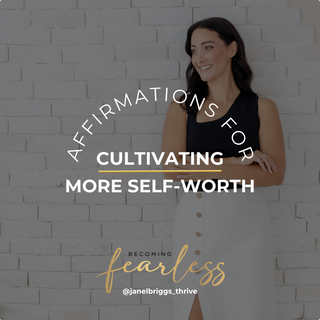 You may have had a similar response or mindset too?I've had clients tell me they're kids are always dressed in the best clothes - yet they're still wearing those old shoes with the hole in them they bought 5 years ago! Or, they'll even pay for the finest food, toys and new beds for they're fur babies - yet they're still using a broken hair brush from 2012! Or, they won't even blink an eye at loaning a family member or friend money to support their idea or dream - yet won't do the same for themselves! WHY ARE WE LIKE THIS??Honestly, I believe it comes down to priority and self-value. Where we place ourselves on our own priority list matters. We forget about how important it is to invest in ourselves, in our own progression, healing and growth. I can tell you that in every decision I used to make - I was at the bottom of my priority list. Somehow in my role as the "responsible care-taker" in my immediate and extended family I thought else's needs came before mine. What I came to realise (after hitting a rock bottom with my mental health in 2017!) is that my needs and taking care of myself HAD to come FIRST. I needed to be a top priority in my life, instead of bottom of the list. If I couldn't make myself a priority and voice my needs - then how would anyone else ever make me a priority too? My last questions for you is this: How can you move yourself up the priority list this week
And if you have any questions or comments on how to get started - please reach out! 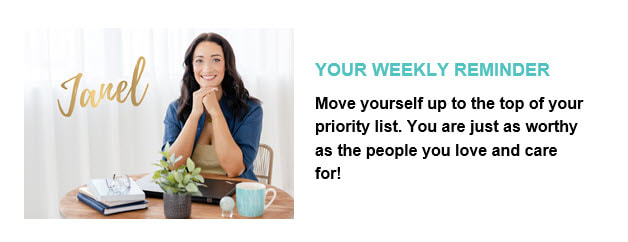 About the Author: Janel Briggs is an Author, Mindset Coach, Practitioner of NLP and Timeline Therapy on a mission to support women across the world in overcoming their anxiety - personal insecurities and professional fears - to build unwavering confidence and self-belief. Mindset Coaching aims to help you fearlessly elevate your life and career, and more importantly the relationship you have with yourself! Connect with Janel on social media via Linkedin or Instagram. 
0 Comments
Back to Blog
If you’ve ever found yourself waking up feeling on-edge, super anxious, worrying about something you might have said or done after a night out of fun and drinking, rest assured - you're not alone. 'Hangxiety' is a common experience shared by many women, so I want to help you understand the cause better to so you can manage through it and breathe easier this holiday season! Our Body + AlcoholThe science behind 'hangxiety' is rooted in the intricate workings of our brains when alcohol is consumed:
 If you’re interested in learning about how alcohol + sleep affect anxiety I cover this topic in detail in my new book “Becoming Fearless” – The Complete Guide to Anxiety Relief along with 12+ anxiety relief tools! Women vs Men’s 'Hangxiety'Women tend to metabolise alcohol differently to men due to differences in body composition and our enzyme levels. This can result in a quicker rise in blood alcohol concentration while drinking and intensify both the initial “calming effects” and subsequent “glutamine rebound” = anxiety. Women who are already prone to anxiety are more susceptible to experiencing intensified 'hangxiety' after drinking. Reason being - our body’s anxiety alarm system is super in tune with hormone fluctuations and likely in a pattern of triggering to negative or worried thoughts! How to Cope with Post-Drinking Anxiety The duration of the ‘hangxiety’ feeling will vary person to person, typically peaking the day after and lasting up to 24 hours or longer, depending on factors like how much alcohol you drank and physical/emotional/mental conditions (aka if you’re in a high stress period/already anxious mindset then look out - symptoms will be intensified!). Waking up with fragmented memories from the previous night can also contribute to post-drinking stress of course. Dealing with 'hangxiety' requires a high level of self-compassion. This is where you need to remind yourself -
Do something to distract and relax your mind, such as watching a favourite show or practicing mindfulness through meditation, aids in easing 'hangxiety.' And avoid consuming more alcohol or stimulant’s like coffee, which can just exacerbate anxiety. ‘Hangxiety’ PreventionIf you want to prevent 'hangxiety' it will involvessome moderation and mindful drinking and I also believe assessing where you’re at emotionally and mentally before you drink is key.
By understanding how the body works and the triggers, and implementing a few preventive measures and coping strategies, I hope 'hangxiety' won’t overshadow this year’s festive cheer for you!
Back to Blog
This one is for all the Overthinkers13/11/2023 Do you ever find your mind spinning about all the “what if’s” and the “unknowns” within a problem or situation and you just can’t seem to shut those damn thoughts off? Overthinking is something that happens to the best of us, and it’s a sure-fire trigger for anxiety. It’s kind of like there’s a dance party going on in your mind with all these thoughts on a wild and random playlist. You’re expecting “Sunday Chill” and get delivered “Hard Rock Hits of 1990”. YIKES! When things get too chaotic, we often forget that we are the DJ of the crazy party going on in our mind. We can take control of the playlist, even if the volume of the music feels a little loud and out of our control. We can dial it down. But how? This week, perhaps start by recognizing when you are overthinking and practice interrupting the pattern of thought. Instead of feeding the train of thoughts with MORE questions and scenarios on the overthinking train, try to disrupt the flow and change the tune. Here is a recent video I did for my overthinkers on Instagram which will help! 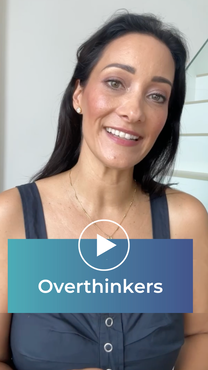 Overthinking is very common in women who experience anxiety. In fact I’ve dedicated a whole chapter to understanding “why we overthink” in my new book, Becoming Fearless launching next Tuesday Nov 21. Here is a sneak peak of some things I share that can help to quiet down the internal noise:
It takes practice, but honestly from experience there is no amount of rehashing a problem that will help find a resolution in THAT moment if you’re anxious. When our thoughts are like a loud party, then we don’t have space to listen to our inner voice of intuition who is trying to give us advice! Shift focus and come back to it at another time. This is your reminder:Sometimes we have to let go of the problem before we can figure it out. The same thinking that got us into the problem, won't always get us out of it!  Ps. You can learn more about Becoming Fearless here and jump on the waitlist to get a copy. It's packed full of actionable tips and tools to help you relieve anxiety, naturally! 
Back to Blog
 Have you ever found yourself wishing that someone in your life would change, thinking it would make everything so much better? Many women experience stress, mental and emotional strain as a direct result of the other people's behaviours and actions. "IF ONLY he/she would do THIS, then everything would be OK!"
If they would just make "this change" then our life would greatly improve, and I could stop worrying. I know, how amazing would it be if the people we cared about would do what we want them to all the time!! But here's the sad truth: You can't force anyone to change.No matter how much you want it for them or love them, what you say or do for them... only they can DECIDE to make changes in their life. You cannot control their choices or outcomes. And all that pushing will ultimately cause you more resentment, heartache, stress and pain. Which I know is a super hard to hear. I've been there too. I have multiple people in my life today I would LOVE to see change their ways - but a decade of trying to change them broke me and I had to learn to let it go. I've also seen this frustration in a few of my past coaching clients' relationships. Where women who have journeyed on the path of self-discovery for themsleves now want the same for their partner, sibling, child, or partent. However, in attempting to push them to "see the light" and change their habits and behaviours, they've ended up causing themselves angst. This is what I can share: You can't change them, but you can be the inspiration for their change. Perhaps even a catalyst, by showing them what is possible. The decision for someone to change their life has to be their own, otherwise the transormation may be fleeting or won't stick long term. If you can't walk the path for them, what can you do? Continue to focus on your own personal growth and well-being. Be the light in their life. From my experience it takes patience, but in time you may notice small shifts and improvements both in your life and theirs. Here are 5 actions you can take:
True power is found in changing ourselves and inspiring the change we wish to see in others. 
About the Author: Janel Briggs is a NLP and Timeline Therapy Practitioner on a mission to support women across Australia and Singapore in overcoming their professional anxieties, imposter syndrome, fears and insecurities to build unwavering confidence and self-belief. Mindset Coaching is about learning how to become fearless and level up your life and career! Connect with Janel on social media via Linkedin or Instagram.
Back to Blog
Ever noticed how one little change can set off a chain reaction that shakes up your whole day? Seriously, it's crazy how something as small as a negative thought, or a random comment from someone's grumpy mood can turn a great start, into a bad day. Think about it - ever had one of those mornings where you woke up on the wrong side of the bed? >> Maybe you spilled your coffee, missed your bus, or your child had a stage 5 meltdown over his corn flakes (true story! lol). And then, BAM! That bad mood tags along like a dark cloud, messing with your interactions and choices all day long. It's like that one negative morning experience defines ALL the experiences of your day. And your thoughts then decide to throw a party and invite all your complaining friends in to gripe all day. On the flip side have you also noticed how one tiny 'thank you' or a kind compliment can turn things around and give your mood a 180-degree boost. It's like a burst of sunshine breaking through the clouds. Suddenly, you're smiling, your steps feel lighter, and you're ready to take on the world!  But here's the cool part. We do have a choice; you can choose to react and response, OR NOT.We often feel like we have NO CONTROL over they day, our mood or emotions. So we go on reacting and responding to everyone and everything around us. Imagine what could happen if we stopped giving the negative experience, thought or comment energy?? Here's a few examples of how to flip the script in your mind and rewrite the day: -> Your spill your coffee - old thought: "I am such and idiot, I don't have time for this, this is going to ruin my day!" (self-criticism) New thought: "Woops, well that is annoying - I'll go change now." (compassion) You encounter someone who is rude/grumpy - old thought: "What a jerk, how dare they speak to me like that, why did they have to X - I'm so mad!" (transferred anger) New thought: "Wow, they must be having a rough day" (deflect the emotion) Missed the bus - old thought: "Oh great, now I'm late and today is going to hell." (frustration) New thought: "That's ok, I'll just have to get the next one - nothing else I can do." (acceptance) And, for the women who just feel like they wake up on the "wrong side of the bed" every day ...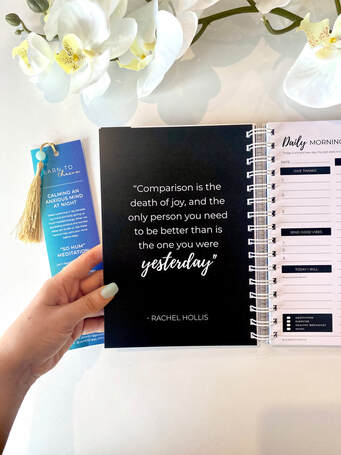 Learn to Thrive ... my morning journal is the ONLY answer for that!Here's why: Every day you have the opportunity to rewrite your day, by following the prompts to set an intention for your day. You begin your day with his simple intention affirmation: "Today I will .... "
By creating an intention for your day you flip the script and become the writer, instead of the audience. I know it seems TOO SIMPLE to be true, but it works. Try it, and see? Ask yourself this: What is my intention for this week? What quality do I want to bring into today? 
Back to Blog
Self-Care Doesn't Have to Be Expensive21/8/2023 In the midst of today's economic challenges, it's understandable that when things get tough, taking care of ourselves often slips to the VERY bottom of the priority list. Everyone, and everything else comes first, I get it. But I want to remind you of two important things - when life/financial/relationship/work stress is high:
Of course, day-spa's and weekend retreats, and nights out with the girls are amazing! But in truth, THE BEST self-care looks like: Setting strong & healthy boundaries around your energy and time! Boundaries are literally the decision you make to put yourself first, even when life is crazy. It's where I say: "This is the energy I will allow in/or the energy output I have capacity for right now" And if you have a tendency to be a people pleaser, have a hyper focus on external validation, or someone who NEVER puts themselves first... I've got a little "Boundaries Bingo Card" ready for you! 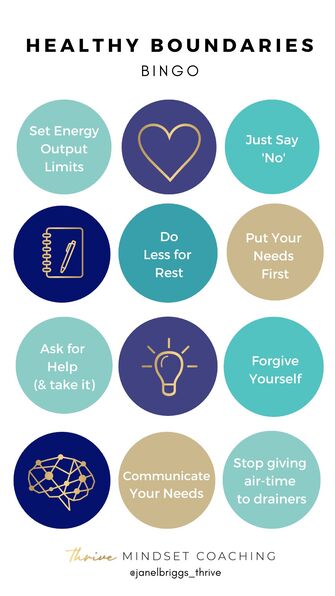 Snapshot that bingo card and this week I would love to inspire you to choose one bubble. Make that one non-expensive thing your self-care focus for this week. And perhaps we need to take a page out of the Baby Boomer's book on the ART OF SAYING NO!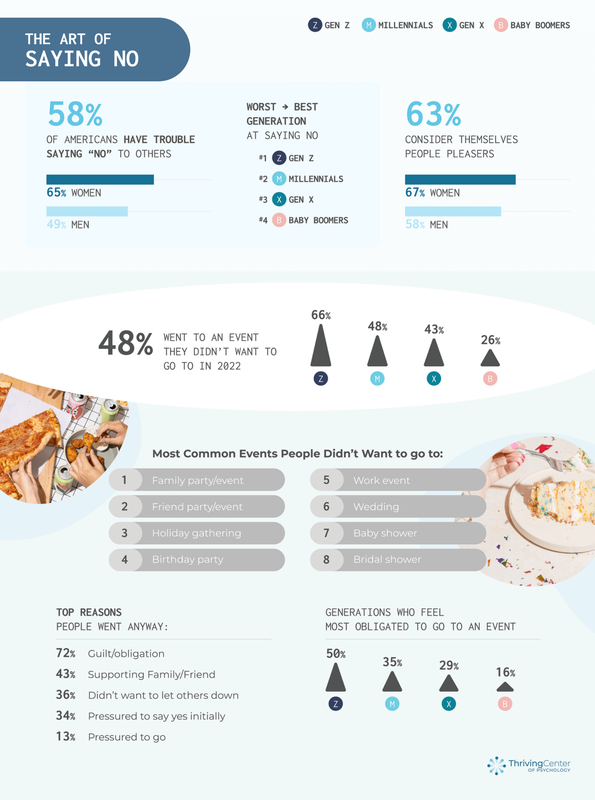 Image & research credit: Thriving Centre of Psychology These stats are crazy right? 65% of women have trouble saying No! Why is it so hard to set boundaries and just say no? As the research above states it comes down to a feeling of GUILT + OBLIGATION. It's high time to flip the switch on that. "If you’re feeling boxed into doing things you don’t want to do, don’t continue the cycle. Now more than ever is the time to prioritize your mental health and your happiness. At the end of the day, that’s what is most important!" - Thriving Centre of Psychology Recently coming off a 7 week summer school break for my son here in Singapore (with a lack of affordable school holiday programs) I was chatting to another Mum about how we've coped. She said "Wow, you've got strong boundaries!" I said yes absolutely. I've hit burnout enough times(!) to learn what I need to operate at my best, and now I honour that. These are some of the self-care habits that I stick to. Self-Care habits (without the price expensive tag):
Remember, you're worth every effort you invest in yourself. Life is always going to be busy, and I know you probably don't have the time, energy, or resources right now for self-care. But if you don't put yourself on the priority list now... who else will? Any comments or questions, please reach out.  About the Author: Janel Briggs is a NLP and Timeline Therapy Practitioner on a mission to support women across Australia and Singapore in healing their professional anxieties, insecurities and imposter syndrome to build unwavering confidence and self-belief. The goal is to level up your life and career by learning how to to live fearless and anxiety free! Connect with Janel on social media via Linkedin or Instagram.
Back to Blog
Busy Isn't Always Better14/8/2023 Have you inadvertently fallen into the trap of becoming addicted to that constant state of being busy? We've grown accustomed to this continual rush, over-committed on the move. And I get it, there is always so much to do. Work, home, family, life. We live in an "on demand" society, where everything is urgent, and everyone expects everything to be done yesterday. Now, I'm not saying being busy is inherently bad. We definitely have learned how to multi-task and get sh*t done! But let's be real - when we are sucked into this whirlwind of non-stop activity, we often disregard own own well-being and miss out on the subtle signals our own bodies are trying to send us. Research shows that a third of Australian’s are under “chronic time stress”.
Higher levels of time stress are correlated with worse mental health, lower self-rated health, less exercise and lower life satisfaction. (sourced: https://pursuit.unimelb.edu.au/articles/a-third-of-australians-under-chronic-time-stress) And have you ever noticed that after a crazy stretch of hectic months, the moment you finally give yourself a break, take a vacation or even just a single day off - you end up falling sick? Here's why:
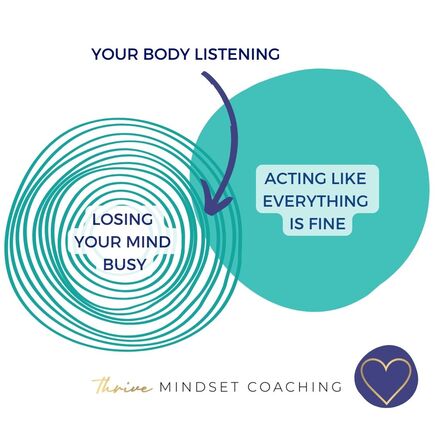 So, my message is this: Busy isn't always better. Could "busy" taking you away from something you don't want to deal with? What is your constant "need to be busy" behaviour telling you? Take a moment to reflect today:
And let's stop wearing "busy" like a badge of honour and telling each other how busy we are. I would much rather hear about how quiet, content and happy you've been! The truth is, when your life is jam packed – you’ll be less likely to have time to be present from the multi-tasking and external noise. And being present is the place where feel MORE happiness, joy and contentment. What’s more important? Janel Briggs If you need support to help you release stress and calm your mind check out my free guided meditation here for relaxation.  About the Author: Janel Briggs is a NLP and Timeline Therapy Practitioner on a mission to support women across Australia and Singapore in healing their professional anxieties, insecurities and imposter syndrome to build unwavering confidence and self-belief. The goal is to level up your life and career by learning how to to live fearless and anxiety free! Connect with Janel on social media via Linkedin or Instagram.
Back to Blog
 We've all faced moments when emotions surge within us like an angry storm. Emotional outbursts, fiery and fierce in intensity take centre stage and knocks us off our center. Defensive barriers go up, words are said, and actions are taken that don't always leave us feeling good. What I've learned is that most of the time, it's not really about "the thing" that triggered the angry storm... is it?
Although those things are super ANNOYING ... they are just the tip of the iceberg, aren't they? It's MORE THAN that "one thing" presenting itself... it goes deeper than that. As a Mindset Coach it's my role to help YOU understand what is laying underneath those icy waters at the base of the iceberg. Where the anger is in fact fueling from. Anger itself is largely perceived as a secondary emotion that shows up when we feel we need to defend ourselves. Most often, it's about OUR NEEDS. What the anger is usually saying is ... when X happens (at home, work, in this relationship) I don't feel: valued. loved. appreciated. included. understood. seen. heard. special. Am I right?? 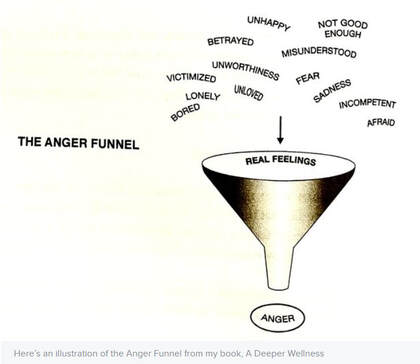 LEARNING TO RELEASE & PROCESS ANGER. Internalised anger and resentment acts like poison in the body, and will eventually end up festering and eating away at the container it is in. The anger held deep down inside, has to come out sometime. It won't stay locked up forever. Sudden outbursts, conflicts and arguments begin to show up in other areas of your life for no aparent reason - not just with the person you originally felt angered by. So, what can you do to release and process before it festers? How to process emotions is sadly not a skill they teach us at school. I call it a skill because it'rs super important to learn and it takes awareness and practice to master. In my belief journaling the #1 way to process your emotions. Here's how you can get started: TUNE INTO THE REAL SOURCE OF YOUR ANGER: 1. What specifically is causing me to feel angry/irritated/frustrated? 2. Is it really about this one thing, or is it more than that? 3. How are my needs are not being met? 4. Where am I holding anger in my body? 5. Acknowledge the true feelings beneath your anger (acceptance) and ask - what do I need to do in order to be at peace? From here, you'll get clear on the next best course of action. J A N E L B R I G G S Thrive Mindset Coaching And, as always if you need more guidance please reach out via DM. Learn more about my 1:1 coacing programs here. TimeLine Therapy is an incredible tool for guiding you to release anger (and various other negative emotions) from it's core and get to the root of the problem.  About the Author: Janel Briggs is a NLP and Timeline Therapy Practitioner on a mission to support women across Australia and Singapore in healing their professional anxieties, insecurities and imposter syndrome to build unwavering confidence and self-belief. The goal is to level up your life and career by learning how to to live fearless and anxiety free! Connect with Janel on social media via Linkedin or Instagram.
Back to Blog
Escaping the Trap of a Lack Mindset19/6/2023 Do you ever catch yourself fixating on what is lacking in your life?  All the things you don't have... all the things that aren't going well for you? "I don't have enough X (money, time, friends) Why can't I have a new X (job, relationship, car, house, handbag, etc) like so-and-so?!?! I never get the X (good opportunities, promotions, luck)" Leaving you feeling unfulfilled, and on a constant churn of stress while pushing and striving for more? It's easy to fall into the trap of longing for all that we don't have. I've certainly done it. Too busy looking over someone else's fence at what they're doing, instead of focusing on being present in my own backyard. We live in a world that often emphasises comparison and scarcity; Social media is a huge trigger. If you've been wondering, how to get out of this lack mindset and feel good about your life, you probably don't realise that you have a few things within your control today, that can help you shift your mindset. Even if you stay in exactly the same position you are in. Here 's how to get started: 1) Cut Down Social MediaIf you are following accounts that make you feel "ick" after scrolling, then mute these accounts for 30 days. See if you missed the content?? If you did, then go back to it and re-test how you feel after a break. If you didn't miss it at all, and you noticed a positive shift ... then unfollow the account. Social media's general purpose is for connection and entertainment. If you're not feeling those things, then you won't miss anything that was good for you! 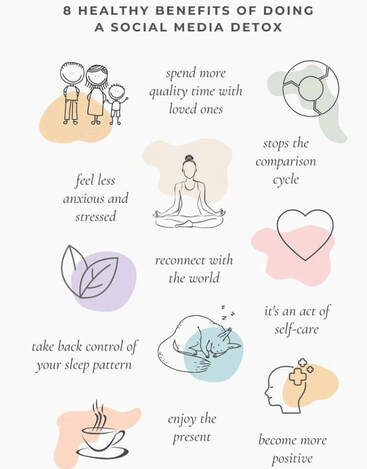 (original source unknown, found Instagram @itssarahbryant) 2) GratitudeI know, I know... everyone talks about gratitude. But that's because it works! Science tells us that when you shift your focus to appreciate what you already have, you'll feel MORE content. "I am grateful for... " Write down 3 things you are grateful for every day, on paper, in a journal, or your phone. I've even had a client who prefers to voice note her gratitude while she walks in the morning! Love it. A few years ago I read a phenomenal book by Louise Hay, called “You can Heal Your Life”. Louise is the grandmother of self-help books and the queen of affirmations and gratitude. One chapter in the book was really transformation for me. Louise talked about her own feelings of lack around money, and fear of her finances. To combat this anxiety and overwhelm she use a small shift in language that had a huge impact. Each and every time a bill arrived in her mailbox; she would BLESS THE BILL and say: "Thank you for the money in my account to pay for this bill. I appreciate this bill, knowing I have the funds to pay for it." And, somehow she would find the money to pay for the bill, without stress. Wow, what a concept! Even reading this - how different does that feel? 3) Celebrate
We also usually are not comparing apples with apples. We get stuck looking at other people’s success and comparing our apple experience with their orange experience! It just doesn’t make sense. Celebrate your big and small steps. “I am proud of myself for … “
Look around you right now. Where are you sitting? What do you already have around you right now? Little moments happen every day that are proof that you are on your way to abundance, look for them and celebrate those moments. 5 years ago, I used to DREAM of the coaching business I have now! Imagine if I had of given up … because I got stuck in comparison and lack? There was healing, learning and growth I needed in order to become the Coach I am today. It was all worth it! Author Gabby Berstein in her book Super Attractor has this wonderful concept she uses for celebrating and focusing on abundance. It’s called “Gathering Twigs”. You create a list on your phone and every time you have a win, something good happens, or there is a sign that shows you that you are on the right track, you write it down. I did this FOR YEARS. And it works. Anytime I felt lack or comparison, I would start a new list. Looks like this: 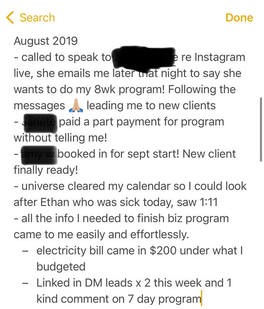
Comparison and judgement lead to resentment. Resentment is like anger, it can be toxic and poisonous. It will eventually eat away at the container it is in. If you are walking down the street and notice a woman with great shoes, and immediately you feel envy - compliment her. Either out loud to her, or in your mind. Sounds like: “Wow, amazing shoes, I love them”. If you are scrolling social media and notice someone who is celebrating and achievement and you immediate feel less than, or upset that you don’t have what she has – celebrate her. Sounds like this: "Well done, that's amazing. Good for her getting that new (job, relationship, house xyz). I know I am on my way to getting that soon too." See how different it feel? Remember, your journey is unique. You can and you will get to where you want to be. Staying present in your life, focusing on gratitude and celebrating your accomplishments is how you will get there. All the best, JB
Back to Blog
 Have you ever found yourself seeking happiness through external validation? For years, I placed my happiness in the hands of others, constantly thinking that if certain people or circumstances aligned in a certain way, then I would finally be happy. I would catch myself saying things like, "If my parents, sister, husband, son, boss, colleague, or X did THIS, then I would be happy." I tied my happiness to achieving good grades, receiving recognition at work, earning a promotion, or even reaching specific milestones in my first business. My joy was dependent on external factors and the validation they provided. The problem was, and what I've realised through Mindset Coaching, is that MY long term happiness is an internal job... I am the only one that can change it or make it happen. Yes, the external factors could give me a temporary hit of happiness, BUT they could never give lasting contentment. Here's why: 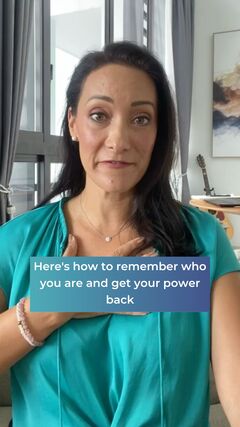 * We cannot control the external factors! Or other people's opinion of us * We cannot control how much or little someone loves us! Or HOW they specifically show us love The key was... I had to learn to know, love and accept MYSELF (all facets and parts of me) - in order to find my self-worth and experience a contentment that I never even knew existed. And the most amazing thing happened, when I stopped seeking external validation... I got my power back! In this video, I share the three crucial steps I took to break free from the cycle of seeking external validation and find true self-worth. Let me detail the 3 steps I took for you here: 1. Get clear on what is in your control and what isn'tI learned that I cannot control other people's actions, reactions, behaviours or even the way they love and treat me. I cannot control every single outcome, to every situation in my life. There will be uncertainty, there will be change, there will be things that do not always go my way. No matter how hard I work or try to make it different. I can only control what is within my circle - my mind, my body, my emotions and my behaviours. How I think, reaction and respond is up to me. 2. Start your day with a focus on self-careI started my day with a simple shift. In order to love myself fully and build self-worth I need to be the most important person in my world, my needs matter. My own self-care has to be a priority. I decided to wake up 15 mins earlier, to sit listening to a short 5 min guided meditation and I did 10 mins of journaling positive affirmations - something I had never done before! (If you are new to meditation I have a few to help get you started here) I spent 10 mins stretching and doing yoga, then ate a healthy nourishing breakfast and I listened to music while getting ready for work. I found this short 20-30mins of "me-time" first thing in the morning would calm and refocus my mind, before the chaos of the day began. When I filled my "needs cup" first, I found I wasn't looking to other people or external factors to fill my own needs. 3. Do one thing this week that brings you JOYI began a new habit where once a week I would do something that brough me joy - something just for me. Where I didn't have to do anything for anyone else. You see, I began to remember who I was outside of all the labels and hats I wore. Outside of the expectations, demands, stress and achievements of work. I started to love and reconnect to my inner child, the part of me that had gotten lost from putting all my happiness eggs outside my own basket. The part of me that was waiting for someone else to love, care and adore me, the way I wanted. It's an empowering feeling not waiting for someone to give you everything you need. I began to breathe easier and smile more often. Life felt less heavy and more enjoyable. I realise that it had to start with me, just like it has to start with you. And I am here to tell you - YOU can absolutely do it too. JB  About the Author: Janel Briggs is a NLP and Timeline Therapy Practitioner on a mission to support women across Australia and Singapore in healing their professional anxieties, insecurities and imposter syndrome to build unwavering confidence and self-belief. The goal is to level up your life and career by learning how to to live fearless and anxiety free! Connect with Janel on social media via Linkedin or Instagram. |

 RSS Feed


|

|
Stay Connected
Subscribe and be the first to access new blog content news & updates. |