• 1:1 Coaching
    • Rediscover Your Spark
    • Client Testimonials
  • Resources
    • Positive Affirmations
    • Guided Meditations
    • Books & Guides
  • Store
  • About
    • My Story
    • FAQ >
      • What is NLP and TimeLine Therapy?
      • What are limiting beliefs?
      • What are Negative Emotions
      • Relieving stress & anxiety
      • What is a growth mindset?
      • Can Meditation remove negative thoughts?
    • Contact
  • Blog
  • EWC
  • 1:1 Coaching
    • Rediscover Your Spark
    • Client Testimonials
  • Resources
    • Positive Affirmations
    • Guided Meditations
    • Books & Guides
  • Store
  • About
    • My Story
    • FAQ >
      • What is NLP and TimeLine Therapy?
      • What are limiting beliefs?
      • What are Negative Emotions
      • Relieving stress & anxiety
      • What is a growth mindset?
      • Can Meditation remove negative thoughts?
    • Contact
  • Blog
  • EWC
Thrive Mindset Coaching
  • 1:1 Coaching
    • Rediscover Your Spark
    • Client Testimonials
  • Resources
    • Positive Affirmations
    • Guided Meditations
    • Books & Guides
  • Store
  • About
    • My Story
    • FAQ >
      • What is NLP and TimeLine Therapy?
      • What are limiting beliefs?
      • What are Negative Emotions
      • Relieving stress & anxiety
      • What is a growth mindset?
      • Can Meditation remove negative thoughts?
    • Contact
  • Blog
  • EWC

THE NEXT CHAPTER

GUIDANCE FOR WOMEN NAVIGATING MAJOR LIFE TRANSITIONS & THE JOURNEY BACK TO THEMSELVES
Don't miss a thing! Subscribe for free weekly coaching inspiration and support
SUBSCRIBE NOW


    Author

    Janel Briggs
    Empowering Women to Become Fearless & Confident through Major Career & Life Transitions

    Categories

    All
    Affirmations
    Anxiety
    Burnout
    Business
    Career
    Christmas
    Coaching
    Communication
    Comparison
    Criticism
    Fear
    Fear Of Failure
    Goal
    Goal Setting
    Growth Mindset
    Habit Change
    Identity Crisis
    Imposter Syndrome
    Job Satisfaction
    Judgement
    Mental Health
    Mindfulness
    Mindset
    Morning Routine
    Overwhelm
    People Pleasing
    Perfectionism
    Relationships
    Self Care
    Self-care
    Stress
    Success
    Suicide Prevention
    Validation
    Values
    Worry

    RSS Feed

Back to Blog

One Step Forward, Two Steps Back Doesn’t Mean You’re Back at the Beginning

13/5/2026

 
This week I had a 3-day migraine.

And if I’m honest, it scared me.

Not just because of the pain itself… but because it immediately reminded me of a version of myself I used to know so well.

The version of me who lived with chronic migraines and chronic pain every single month.

​The version of me who would spiral into fear the second symptoms appeared.
  1. What’s happening?
  2. Why is this happening?
  3. Am I going back to chronic pain "me"?
  4. Is this going to become my normal again??

And even though logically I knew this was the first random migraine I’ve had since December 2024 (a VERY long time!!!) … my mind still wanted to panic.

Because that’s what the brain does when something reminds us of an old painful chapter.

It searches for danger.
It searches for certainty.
It searches for proof that we’re somehow going to be  stuck “back there again”.

But here’s what I had to remind myself this week:

One hard moment DOES NOT erase all the healing, growth, work and progress you’ve made.

One setback does not mean you’re back at the beginning!


​And I think this is something so many women experience during seasons of transformation and personal growth.

You start changing your habits.
You begin to set boundaries for yourself and others.
You start healing.
You begin reconnecting to yourself again.
You feel stronger, clearer, more grounded.

And then suddently the worst happens... 

You have an anxious week.
You overthink again.
You emotionally react.
You feel exhausted.
You doubt yourself.
You fall into old habits or old fears.

And immediately the mind says:
  • “See? Nothing’s changed.”
  • “I’m back where I started.”
  • “I thought I was past this.”

But healing and transformation were never meant to be linear. Growth isn’t a straight line upward where you never wobble again.

Real transformation looks more like:
  1. Forward movement
  2. Pauses
  3. Triggers
  4. Lessons
  5. Regulation
  6. Expansion
  7. Rest
  8. Then forward movement again (and REPEAT!!)

The difference is not whether you ever experience another difficult moment...
Picture

The difference is who you are now when the difficult moment arrives.

Years ago, when migraines and chronic pain were a regular part of my life, I didn’t have the support system and awareness or tools I have now.
​
Back then, I felt powerless inside what I was experiencing. Mainly because no one could help me understand EXACTLY WHY I was feeling the way I was feeling. It took me a long time to find the right support and enlist the help of my own body's intuition to get to the root cause and find a solution to my pain.

But this week, despite the major discomfort, I noticed something important:
  • I knew how to support myself
  • I knew how to slow down
  • I knew what my body needed - REST!
  • I knew who to ask for help and what to specifically ask for
  • I knew how to regulate my nervous system instead of catastrophizing every thought

And perhaps most importantly… I trusted that this moment would pass.
That is growth. And growth isn't perfect. It dips, ebbs and flows.

If you're in a moment (or season!) that feels like a backwards step, remember this:

YOU WILL MOVE FORWARD AGAIN!

Be open to meeting yourself differently when you do. I think many women unknowingly measure healing by asking:

From : “Why is this still happening to me?”

But a far more powerful question is:

To : “How can I support myself through this?”
  • What do I need right now?
  • What would help me feel safe, comfortable, more certain?
  • What would help me feel grounded?
  • Who can I lean on?
  • What tools have helped me before?
  • What is the most important thing I need?

Because transformational change often requires us to stop identifying with the old version of ourselves every time life gets hard.

A difficult week does not mean you are broken.
A setback does not mean you failed.
An emotional dip does not erase your progress.
It simply means you are human.

And sometimes the greatest sign of healing is not that you never fall backwards emotionally…

It’s that you no longer stay there.
You recover faster.
You become more self-aware.
You stop abandoning yourself during hard moments.
You stop turning temporary setbacks into permanent identities.

One step forward and two steps back can still be progress if you keep moving.
Because you are not the same woman you were before.


You’ve learned.
You’ve grown.
You’ve built emotional tools, awareness and resilience along the way.

And even if this season feels heavy right now, that doesn’t mean you’re stuck there forever.

You’ve already proven to yourself that you can move forward before!!
You will move forward again.

What is within my control today?

​-Janel Briggs

Picture
Work with Janel
0 Comments
read more
Back to Blog

Why Sleep Is the Foundation of Emotional Stability

22/1/2026

 
Picture
If you’ve been feeling more anxious, reactive, or emotionally fragile lately, it’s easy to assume you're just not coping as well as you 'should be'.

Lashing out when normally we’d be more rational.

Taking things more personally and becoming overly sensitive to other people’s comments or opinions.

At work, letting doubt set in after small interactions, or assuming the worst in situations we’d usually handle with perspective.
Over time, we internalise these reactions as a mindset problem. 
But it's not, it’s more often a sleep problem.

When our nervous system is simply running on empty, it can affect how we think, react, communicate, and interpret the world around us.

Think of a toddler who dropped their nap and is overtired? They become the most irrational crying-screaming human being on the planet! Think of a 5 year old who is overstimulated? They become as difficult to rangle as a herd of cats!

Adults are very much the same, we just get better at masking it.

One of the very first things I help women with in coaching is untangling the sleep puzzle. Because when we can establish a more regular sleep pattern, the shift in emotional resilience and day-to-day steadiness can be surprisingly profound.

Sleep is emotional regulation, not recovery alone.

Have you ever had a terrible night’s sleep that turned what is normally a manageable day into an emotional rollercoaster?? Where one small inconvenience sparked so much frustration it lead to tears and total overwhelm? 

Yes, I see you - I've been there too. Why on earth do we react like this?!


Research from Harvard Medical School shows that sleep plays a critical role in how the brain processes emotion. During sleep, particularly REM sleep, the brain integrates emotional experiences and lowers their intensity.

However, when sleep is compromised:
  • Anxiety increases
  • Emotional resilience drops
  • Small stressors feel overwhelming
  • Decision-making suffers​

A 2019 study from the University of California, Berkeley, aptly titled “Overanxious and Underslept” found that insufficient sleep can trigger up to a 30% increase in anxiety levels the following day.
What's even more eye opening?

The same research showed that deep NREM sleep acts like a natural anxiety inhibitor.
During this stage of sleep, the brain calms the emotional centres, lowers physiological stress responses, and prevents anxiety from escalating.

In simple terms: deep sleep helps your brain stand down from 'threat' mode.
For me, this is proof that sleep isn’t just a “nice to have”. It’s a foundational part of the equation and a practical tool we can use to care for and protect our nervous system.

That’s the mindset shift I want you to take away today.
Sleep is where emotional experiences are processed - without it, emotions stack up like bricks in a wall. There are only so many bricks we can carry before the wall cracks.

Why anxiety spikes when sleep drops

​When our sleep is discupted, activity increases activity in the amygdala, the brain’s fear and threat detection centre, while reducing regulation from the prefrontal cortex.

In real life, this looks like:

  • Heightened emotional reactivity
  • Reduced ability to self-soothe
  • Small stressors feeling overwhelming
  • Decision-making becoming harder

This is why women who are already high-functioning, capable, and driven often feel more distressed when sleep drops. Your system is doing its best, but without enough deep sleep, it simply doesn’t have the resources.
When I started sleeping better, my anxiety didn’t totally disappear - but it became more manageable again. I seemed to have more resilience and the world felt less against me.

Rest is important, but it isn’t the same as sleep

Many people believe they’re "resting" while laying on the couch or in bed, but their nervous system disagrees.

If you're scrolling, binge-watching TV, or working from bed this still keeps the brain stimulated.

The body may be still, but the mind is still processing and remains on alert! 

True rest (for mind and body) requires disengagement.

Generally, reading a book is the lowest stimulation for resting compared to screens, but it still engages the brain. Whether it feels restful or activating comes down to what you’re reading and why you’re reading it.

More likely to be restful:
  • Light fiction or familiar novels
  • Gentle, comforting books you’ve already read
  • Slow, immersive stories that don’t require problem-solving
  • Reading for pleasure (not to “learn” or optimize)

This kind of reading can help the nervous system downshift, especially in the evening and right before bed.

Reading that is more likely to be stimulating:
​
  • Non-fiction, self-development, or business books
  • Anything that sparks insight, ideas, or “I should be doing…” thoughts
  • Reading on a phone, tablet, or Kindle with notifications/light exposure
  • Reading with the intention of productivity or self-improvement

This keeps the brain in processing mode, even if your body is still!

If you love personal development books, my advice is always to read those in the morning or during the day, so your brain isn't stimulated at night thinking about all of the things you've just learned. 
If your body is resting but your mind is still ‘on’ then your system hasn’t stood down.

3 Practical Ways to Support Deeper Sleep

Here we go, now we're getting into the good stuff. First off, you don’t need a perfect routine but you do need consistency.

These three changes alone often create noticeable shifts for my clients:

1. Cut caffeine (and sugar) earlier than you think

Caffeine can remain in your system for up to 8 hours. If anxiety or racing thoughts are an issue, aim for no caffeine after 1pm to give your nervous system time to downshift and process the caffeine. That means coffee, green tea, matcha, chai, and most soft drinks. 

It’s also worth being mindful of heavily sugary foods and drinks. Sugar creates a quick energy spike followed by a slump, which often leads to craving more sugar or caffeine stimulation to “perk up” - keeping your nervous system in a cycle of highs and crashes rather than settling into rest.


2. Remove your phone from the bedroom

If you're in the habit of middle of the night wake ups, where you reach for your phone to check emails and notifications during the night, then my number 1 non-negotiable to break that habit (to help you get better quality sleep) is to place your phone in another room when you sleep.

Go back to using a traditional alarm clock for your morning alarm. Leave your phone in your en-suite or outside your bedroom door. Even brief screen exposure can spike alertness and make it harder to return to deep sleep.


3. Create a work and screen buffer before bed

Aim for no phone at least one hour before sleep, and no work two hours before bed. This creates a healthy boundary around technology and work that sends a clear signal to your brain that the day is complete and it’s safe to rest.

Many women also find that a short, guided sleep meditation helps close down the “open tabs” in the mind and relax the body into deeper sleep states.

Here's one I recorded for you: "Peaceful Sleep Guided Meditation"

No working from bed either! Think of your bedroom as your place of rest, we don't want the brain to be "on" think, think, thinking about all the things happening at work and our to-do list when you're trying to sleep.

The mindset shift: Deep sleep is essential for stress,  anxiety and emotional resilience

So how many hours of sleep should you aim for each night?

Ideally around eight hours. But if you’re currently averaging closer to six, don’t try to overhaul everything at once. Build your sleep in small, sustainable steps. This week, aim for 6.5 hours and focus on consistency: similar bedtimes in the evening and similar wake-up times in the morning.

Small shifts done consistently are what retrain your nervous system. Over time, those half-hour gains add up to deeper rest, steadier emotions, and a version of you that feels far more like yourself again.

Picture
0 Comments
read more
Back to Blog

When Life Turns Upside Down: Recognizing a Lifequake

5/11/2024


Have you ever had that sinking feeling that life, as you know it was crumbling beneath your feet?

Yes well, that’s exactly what I've felt this year.

I most certainly did not have a “Lifequake” on my bingo card for 2024. Predonimantly caused by a decision my family made to move from my beloved Singapore in Asia, to Florida, USA for my husband's job mid-year. 

Navigating this move seemed easy on the "outlook". But throw in a steep learning curve on natural disasters as we were thrust into two major hurricane evacuations upon arrival, a lengthy furniture shipment delay leaving us in an empty house, two personal injuries (one after the other!) that had me hobbling for weeks, AND just last week a bout of emergency surgery for my son's appendicitis...

I'm just about all out of "sanity" by this point!

The bigger issue here - all of these challenges have meant I've needed to pause and take time off launching my coaching into the USA timezone to reacquaint my nervous system with:

a) my new environment, and
b) this ever evolving version of myself

If you’ve ever felt or experienced something like a “lifequake” before - you'll know there is only one way to explain it... 

It’s extremely UNCOMFORTABLE!

And of course, life must go on, so you do your best to keep things together. While feeling like the LIFE you had carefully constructed is slowly but surely falling apart under your feet.
Picture

What is a Lifequake?

A lifequake is more than just a life change; it’s a deep, pivotal shift that redefines your path and perspective.  

  • Lifequakes often come uninvited and without warning, shaking the very core of who you are and how you see yourself.
  • Think of it like a personal earthquake that affects not just your outer world but also your inner sense of stability and direction. 
  • Most people go through at least three in their lifetime. Some are planned, like changing careers or starting a family, while others are unexpected, like a sudden illness, complex grief or the end of a marriage.  

​Lifequakes tend to mark the start of a transitional phase, one that can last months or even years, where you’re adjusting to a “new normal.” 

How to Recognize When You're In A Lifequake Transition

From my personal experience, the first step to navigating a lifequake is to recognize that you’re actually in one!

Sometimes we’re so caught up in the busy stress of every day life that we don’t even realize we’re going through a transformation.

Here are some signs you may be in a life transition: 
​
  1. Uncertainty about the Future: The goals or identity that once felt “concrete” and guided you, no longer hold the same relevance. You find yourself unsure of what you want, and with so much “change” the future you envisioned feels less certain.  
  2. Overwhelming Emotions: Life transitions often bring a surge of emotions, ranging from anxiety, sadness and grief to frustration and confusion. It’s as if you’re shedding an old skin, and it can feel uncomfortable. 
  3. Questioning Your Identity: When lifequakes strike, they often shake the foundations of our “sense of self”. You may start questioning who you are, especially if the change disrupts roles that have defined you, such as being a spouse, in a specific profession, or a playing a role within your family unit. \
  4. Feeling Stuck or Directionless: You’re moving forward, but it feels like you’re wading through mud. You might feel lost or trapped between who you used to be and who you’re becoming.
Picture

My biggest learning from this entire experience...

Lifequakes, as challenging as they are, have a way of guiding us toward growth and new possibilities.

Even if they don’t reveal the full picture right away.  

This transition can feel overwhelming, but please know it’s also an invitation to  perhaps rediscover yourself and redefine what truly matters for you at this stage of your life. 

In my blog next week (yes, there is a Part 2!)...

I’ll share simple mindset shifts you can make that will help you find more clarity, resilience, and purpose as you navigate through this season of change. 

It's the exact things I’ve been doing this year that have helped me immensly. 

Picture
If you enjoyed reading this blog, subscribe to my email today and get the next one straight to your inbox!
Subscribe Here
0 Comments
read more
Back to Blog

Transforming Dreams into Reality: Celebrating 5 Years!

23/10/2023

 
Picture
Wow - it's a big Mindset Monday for me.

Celebrating 5 years of Thrive Mindset Coaching!

It blows my mind that I have been helping women to transform their mindset and their lives (busting fear and anxiety) for five whole years.  

This has by far been the most rewarding career I’ve ever had. But it wasn’t something I planned, I literally fell into it after my own life was transformed by an NLP trained mindset coach. 

5 years ago, I met a woman who breathed life into me. 

She showed me I was deserving and worthy of so much more than I was showing up for in my life. She saw a light in me that I didn’t even know existed. My light had been dimmed to dark for so long from “just surviving”.

All it took was for 1 person to say “I believe in you, your story can help people” for me to wake up.  

People (friends and family) probably thought I was crazy; in the 3 years prior to launching Thrive Mindset Coaching, I had quit my lucrative 15-year corporate career and built 3 online businesses that were all flailing... along with my anxiety and mental health.
​
Plus, back then no one even understood what a mindset coach was or did! You want to be what… um ok are you sure?? 

Picture
Early days finding my feet on Instagram Linkedin and You Tube.
But, no matter what people thought or said I couldn’t shake the burning desire in me to help support people.

To pay forward the gifts of knowledge, belief and hope I had been given. 

That is why this milestone feels so incredible.

​As a person who often gave up when conditions weren’t perfect or if the voice of my inner critic told me I was going to fail. “Who are you to do this work? You’re no expert! Your life isn’t perfect.” 
​
I NEVER gave up! 

5 Valuable Lessons Learned in 5 Years of Coaching:

  1. Follow the work, people, situations in life that light you up and make you feel good. This is how you’ll know you are in alignment. 
  2. It’s never too late, there is always time. I started a new career at 41 and it worked out better than I could have imagined! 
  3. Don’t give up on yourself – accept what is not working and just move on. There is no failure, only feedback. 
  4. There is always a way forward, you may not see the path straight away but that’s ok. Things take time and maybe it’s a sign to go within and do the inner work first. 
  5. Keep dreaming – and if you don’t believe in yourself then find a coach/person who’ll share their belief until you build yours!
To my incredible coaching clients, every course participant, journal customer, workshop attendee and my tribe over on Instagram, Linkedin and Facebook - thank you for every video you watched, post or blog you've read!

Your presence means the world to me. 

Cheers to the next 5! 

​Janel Briggs.

Picture

​About the Author:
 Janel Briggs is a NLP and Timeline Therapy Practitioner on a mission to support women across Australia and Singapore in overcoming their professional anxieties, imposter syndrome, fears and insecurities to build unwavering confidence and self-belief. Mindset Coaching is about learning how to  become fearless and level up your life and career!
 Connect with Janel on social media via Linkedin or Instagram.

Picture
Subscribe to my weekly Monday Mindset Magic email and be the first to know about this new product for anxiety relief launching soon!
Subscribe Here
0 Comments
read more
Back to Blog

In Times of World Crisis: Navigating the Storm Together

15/10/2023


Phew... well, this past week has been A LOT to process, hasn't it?
 
I've felt it too, the sense of confusion, helplessness, and overwhelming emotions from witnessing a world and people in crisis. Sick to my stomach reading and listening to the news, hearing the division and clash of words, opinions, and beliefs all over social media on topics that are far away and closer to home.
 
As we’ve seen for hundreds and thousands of years, division brings destruction. Sadly, I have no solution or answers for you.

But I do know that we’ll never be able to right the wrongs of the past with the same thinking that got us here. Often in times like these, when the world-fear and anxiety storm rages I get a little quieter. I go inward to reflect, process my emotions, pray for humanity and peace, and I count my blessings.
 
 I also put in place a few essential practices that assist my mindset:

  
  • Unfollow – it’s ok to mute or unfollow people on social media. If a person's opinions, beliefs or values differ and their content triggers you  just step away. No amount of "reasoning" will ever change their opinion or belief system.

  • Limit the time - it’s also ok to place boundaries around people you will and won’t see if there is potential for conversations that trigger you. Your peace and serenity is most important.

  • Reduce news/social media – checking in once a day, during the middle of the day is my best advice. Waking up in bed scrolling as soon as your eyes open to read the horrific news, or right before you shut your eyes for sleep (when you are less emotionally resilient) isn’t great for your mindset. Even further, when I feel “raw” I ask my husband to filter the news for me and just give me the high level facts.
​
  • Journalling – write out your feelings. As simple as it sounds it’s extremely powerful to get the thoughts and emotions circling in your mind released onto paper. This is the process I share with clients in coaching: “Dear X (person, community, country etc) this is what I have to say to you …” and let your pen flow let it all out.

  • Spead loving-kindness – you may not be able to affect what’s happening in the world on the wider scale, but you can impact the community around us with your good energy. We are all humans living on the same earth, we can pray for unity, peace and humanity.

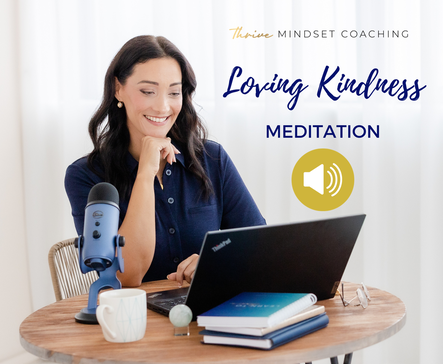
If you're struggling with feelings of hopelessness and sadness from the weight of division in our world I recorded a special meditation for your this week. It's based on an ancient practice that cultivates goodwill and universal friendliness towards oneself and others. 
Picture
Listen Here
After I have done all I can to tackle my emotions and educate myself on a tough problem, this recording helps me to re-focus my mind and nurture my spirit.
Then I'll perhaps take a walk, listen to music, meet a friend for a chat, eat something nutritious, read a good book, go for a bike ride or take a nap. These are all constructive ways to support my mindset to fill time that might otherwise have been wasted on worry about all the uncontrollable's in our world today. 
​Take care, JB

Picture

​About the Author:
 Janel Briggs is a NLP and Timeline Therapy Practitioner on a mission to support women across Australia and Singapore in overcoming their professional anxieties, imposter syndrome, fears and insecurities to build unwavering confidence and self-belief. Mindset Coaching is about learning how to  become fearless and level up your life and career!
 Connect with Janel on social media via Linkedin or Instagram.
0 Comments
read more
Back to Blog

You can't change them (but you can do this)

24/9/2023

 
Picture
​Have you ever found yourself wishing that someone in your life would change, thinking it would make everything so much better?
​

Many women experience stress, mental and emotional strain as a direct result of the other people's behaviours and actions. 
 
"IF ONLY he/she would do THIS, then everything would be OK!"
  • Stop drinking or smoking
  • Save more money
  • Looked after their health
  • Got a new job with less stress
  • Fixed their (XYZ).
  • Listened to me more!
 
If they would just make "this change" then our life would greatly improve, and I could stop worrying. I know, how amazing would it be if the people we cared about would do what we want them to all the time!!

But here's the sad truth: You can't force anyone to change.

​No matter how much you want it for them or love them, what you say or do for them... only they can DECIDE to make changes in their life.

You cannot control their choices or outcomes. And all that pushing will ultimately cause you more resentment, heartache, stress and pain. 

Which I know is a super hard to hear. I've been there too.

I have multiple people in my life today I would LOVE to see change their ways - but a decade of trying to change them broke me and I had to learn to let it go.
​
I've also seen this frustration in a few of my past coaching clients' relationships. Where women who have journeyed on the path of self-discovery for themsleves now want the same for their partner, sibling, child, or partent. However, in attempting to push them to "see the light" and change their habits and behaviours, they've ended up causing themselves angst.

This is what I can share: You can't change them, but you can be the inspiration for their change.

​Perhaps even a catalyst, by showing them what is possible. The decision for someone to change their life has to be their own, otherwise the transormation may be fleeting or won't stick long term. 

If you can't walk the path for them, what can you do?

Continue to focus on your own personal growth and well-being. Be the light in their life. From my experience it takes patience, but in time you may notice small shifts and improvements both in your life and theirs.

Here are 5 actions you can take:
  1. Accept what is: Acceptance and understanding will always help to remove the negative charge, or feelings within you. Start by reflecting on your own feelings and expectations. Accept that you can't control another person's actions or decisions. Embrace the reality that people will continue to make their own choices.
  2. Communicate your needs: Engage in open and honest communication with the person in question. Share your thoughts and feelings, but do so without trying to force them to change. Instead, aim to understand each other better and find a common ground and let them know what you need in the relationship.
  3. Set boundaries: Establish clear healthy boundaries that protect your well-being and values. These boundaries are life fences that keep out the the energy and behavior you will not allow into your space. Rather than trying to make the other person change you may have to change what you can control a) how much time you spend with them b) when and where you will spend time with them c) topics you will or will not talk about etc.
  4. Lead by example: Be the change you want them to see. Demonstrate the behaviors and values you believe in. Sometimes, your actions can inspire others to become "willing" to change
  5. Prioritise yourself: Focus on taking care of yourself emotionally, mentally, and physically. Seek support from friends, family, a coach or therapist if needed. Your well-being should be a top priority, regardless of whether someone else changes or not.
Remember, while you can't necessarily change someone else, you have the power to change yourself and influence the dynamics of your relationships through your own actions and choices.


​True power is found in changing ourselves and inspiring the change we wish to see in others.

Picture
​

​About the Author:
 Janel Briggs is a NLP and Timeline Therapy Practitioner on a mission to support women across Australia and Singapore in overcoming their professional anxieties, imposter syndrome, fears and insecurities to build unwavering confidence and self-belief. Mindset Coaching is about learning how to  become fearless and level up your life and career!
 Connect with Janel on social media via Linkedin or Instagram.

0 Comments
read more
Back to Blog

Shining a Light on Suicide Prevention: Hope, Help, and Healing

10/9/2023

 
Picture
*TRIGGER WARNING* In honour of World Suicide Prevention Day (Sep 10th 2023) This email talks about grief in losing a loved one to suicide, and how you can support someone you love through a mental health crisis.
Three years ago, I tragically lost my dearest friend to suicide.

A beautiful fun-loving soul, the kind of woman who had a smile and laughter that lit up the room. We connected on a deep level, even though she was 12 years younger. I think it’s because we shared similar personal, life and spiritual values. We had an interest in so many of the same things, from learning and travel, to cooking and our love for animals. We loved nothing more than to go for lunch in a cosy cafe and sit chatting for hours over cups of tea.

Her tragic death taught me many lessons about life, the world, the medical system and myself.

I've come to realise the hardest part of grief, in losing someone you love to suicide - is the guilt.

Could I, should I … have done more?

The answer in the mind is always yes. If I had my time again of course I would do so many things differently. 

But, in my heart I know I did the best I could at the time.

Part of the healing process has been to look at my actions and reactions in this event with my mentor and she taught me something extremely important:

Hindsight is a beautiful thing, but no amount of overthinking it will bring peace or bringher back. Acceptance is the key to healing.

I’ve come to realise that my fear of “losing her” in her mental and physical health battle kept my mind clouded and captive.  My voice of fear said:

“What if I say the wrong thing and she dies? I don’t know the answers for how to help her in THIS pain”.

Instead of tuning into my voice of wisdom: 

“You can never say the wrong thing when it comes from a place of love. What if you say the right thing and she lives?”.
​
This is why I am so passionate about helping women with anxiety to learn how to quiet their voice of fear and tap into the loving kindness of their intuition, their voice of wisdom. 
​

By encouraging, understanding, reaching in, and sharing experiences with others, Suicide Prevention Day is about giving people confidence to take action to prevent suicide


​Grief, as you probably know if you've experienced the it, has this way of stripping your heart bare to the darkest depths of your soul. And somehow over time your heart begins to slowly mend the cracks.

I guess is the power of healing and love. 
​But, you are for sure never the same person again. 

The anniversary of her passing each year coinciding with World Suicide Prevention week every September I know as a message for me to remember to, and not be afraid to, tell her story.
​
I will continue to bring light where I can to the darkness. She is worth it, and so are you.

Picture

This is a message for anyone who has a loved one or friend who struggles with their mental health.

Picture

Picture

HOW YOU CAN HELP SOMEONE YOU LOVE IN A
​MENTAL HEALTH CRISIS
 

1.      Listen with compassion, remind them they are not alone and support is available today.

“How would you like me to support you?” or “What can I do to best support you today?”

2.      Help them to put a positive action plan in place to speak with their Doctor, Psychologist or mental health professional as soon as possible.

Remember that this is not solely up to you to fix, it may take a village of support and some time and space for that work to happen.

3.      Add the local mental health support hotline phone number in their phone.

Make the first call with them if needed and start the conversation for them.

“Hello, this is X she has been feeling X and we are looking for some support”

4.      Understand that people in a mental health crisis with suicidal thoughts are typically experiencing an intense negative emotional pain that they just can’t get rid of and this pain feels so big that they don’t know how to move past it.

This pain often makes them feel helpless without options. Ask a few questions to get a feel for the emotional pain or intense stress they are experiencing. Sharing this information with the hotline or medical professional can be helpful.

5.      Do not keep this a secret.

​This is very important. I know there is a stigma and shame attached to suicidal thoughts within our communities. We have to break down these isolating walls. Secrets will only ever keep a person sick. We must bring the dark thoughts into the light in order to have any chance of healing and moving forward

Picture

MENTAL HEALTH FIRST AID

(Training for adults and parents/caregivers of children teens)

Knowledge and resources are what help us to feel more confident and empowered in stressful situations. Did you know there are courses you can take in mental health first aid? Available online for anyone who is interested in learning more about how to support someone through a mental health crisis.

My recommendation for quality online education for understanding mental illness and wellbeing is Meraki Mental Health Training.

​Learn more here:
MENTAL HEALTH FIRST AID TRAINING

Picture

MENTAL HEALTH CRISIS HOTLINES AROUND THE WORLD

​If you or someone you love is having suicidal thoughts, get in touch with one of these amazing and supportive organisations:
 
AUSTRALIA
Lifeline – 13 11 14
Suicide Call Back Service – 1300 659 467
Beyond Blue Counsellor – 1300 22 46 36
 
SINGAPORE
Samaritans of Singapore - 1-767
WhatsApp – 9151 1767
Mental Health Crisis- 6389 2222
 
NEW ZEALAND
Lifeline – 0800 543 354 (text 4357)
Mental Health Foundation – 1737 (call or text)
Suicide Crisis Helpline – 0508 828 865
 
UK
Suicide Prevention UK – 0800 689 5652
Samaritans – 116 123
CALM (evenings)– 0800 58 58 58
 
USA
Crisis Text line – 741741
Lifeline – 988
SAMHA National Helpline – 1 800 662 4357
 
CANADA
Talk Suicide Canada – 1 833 456 4566
The Listening Ear – 517 337 1717 

Picture
0 Comments
read more
Back to Blog

Self-Care Doesn't Have to Be Expensive

20/8/2023

 
In the midst of today's economic challenges, it's understandable that when things get tough, taking care of ourselves often slips to the VERY bottom of the priority list.

Everyone, and everything else comes first, I get it.

But I want to remind you of two important things - when life/financial/relationship/work stress is high:

  1. We're on a fast track to burnout (if we stop focusing on our own needs)
  2. Self-care doesn't have to be expensive!

Of course, day-spa's and weekend retreats, and nights out with the girls are amazing! But in truth, THE BEST self-care looks like:
 
Setting strong & healthy boundaries around your energy and time!
 
Boundaries are literally the decision you make to put yourself first, even when life is crazy. It's where I say: 

"This is the energy I will allow in/or the energy output I have capacity for right now"

And if you have a tendency to be a people pleaser, have a hyper focus on external validation, or someone who NEVER puts themselves first...

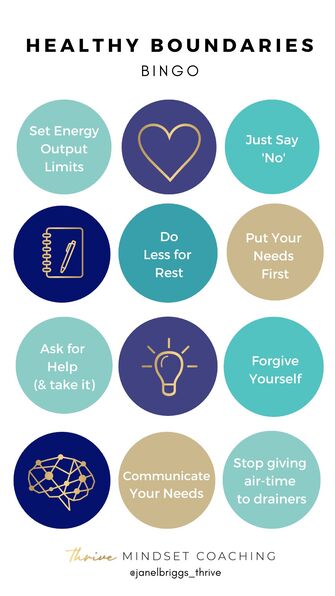
I've got a little "Boundaries Bingo Card" ready for you!
Picture
​Snapshot that bingo card and this week I would love to inspire you to choose one bubble. Make that one non-expensive thing your self-care focus for this week.

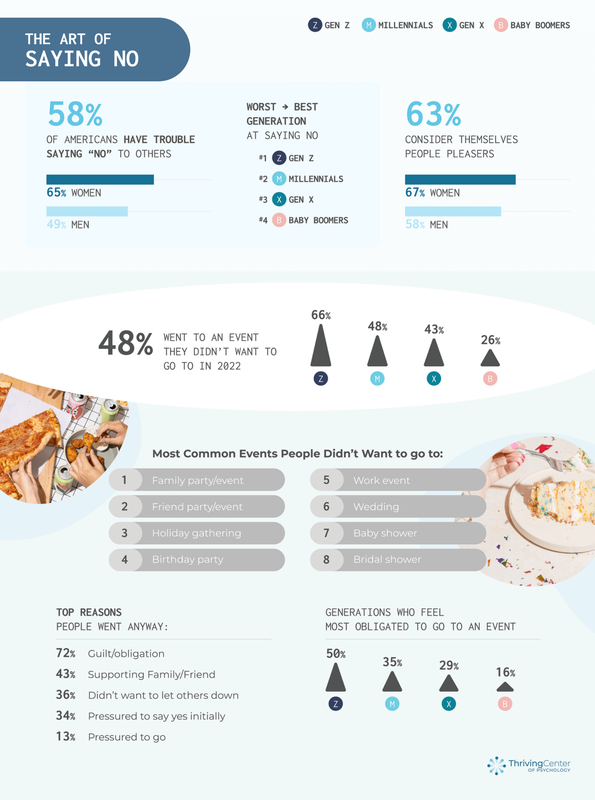
And perhaps we need to take a page out of the Baby Boomer's book on the ​ART OF SAYING NO!

Picture
Image & research credit: Thriving Centre of Psychology
These stats are crazy right? 65% of women have trouble saying No! 

Why is it so hard to set boundaries and just say no?

​As the research above states it comes down to a feeling of GUILT + OBLIGATION.

It's high time to flip the switch on that.

"If you’re feeling boxed into doing things you don’t want to do, don’t continue the cycle. Now more than ever is the time to prioritize your mental health and your happiness. At the end of the day, that’s what is most important!" - Thriving Centre of Psychology

Recently coming off a 7 week summer school break for my son here in Singapore (with a lack of  affordable school holiday programs) I was chatting to another Mum about how we've coped.
​
She said "Wow, you've got strong boundaries!" I said yes absolutely. I've hit burnout enough times(!) to learn what I need to operate at my best, and now I honour that.

These are some of the self-care habits that I stick to. 
​

Self-Care habits (without the price expensive tag):

  • ​Taking a long bath/shower with a home facial and shaving your legs
  • Not skipping breakfast, or sitting to drink your coffee while it's hot in peace
  • Asking someone to look after your kids/pets while you take a breather (walk, gym class, etc)
  • Not booking back-to-back big days when your energy is already spent
  • Scheduling those health appts that have been on the bottom of the list forever
  • Not answering someones call when you don't have the energy or time
  • Saying 'No' to people, places and things that aren't in alignment with what you want

Remember, you're worth every effort you invest in yourself. 


Life is always going to be busy, and I know you probably don't have the time, energy,  or resources right now for self-care. 

But if you don't put yourself on the priority list now... who else will? 

Any comments or questions, please reach out.

Picture

About the Author: Janel Briggs is a NLP and Timeline Therapy Practitioner on a mission to support women across Australia and Singapore in healing their professional anxieties, insecurities and imposter syndrome to build unwavering confidence and self-belief. The goal is to level up your life and career by learning how to to live fearless and anxiety free! Connect with Janel on social media via Linkedin or Instagram.
0 Comments
read more
Back to Blog

Busy Isn't Always Better

13/8/2023

 
Have you inadvertently fallen into the trap of becoming addicted to that constant state of being busy?

​We've grown accustomed to this continual rush, over-committed on the move.

And I get it, there is always so much to do. Work, home, family, life. We live in an "on demand" society, where everything is urgent, and everyone expects everything to be done yesterday.

Now, I'm not saying being busy is inherently bad. We definitely have learned how to multi-task and get sh*t done!

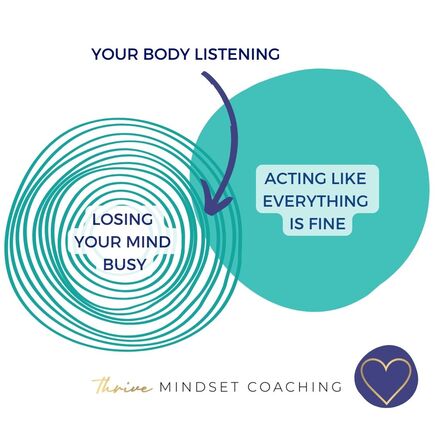
But let's be real - when we are sucked into this whirlwind of non-stop activity, we often disregard own own well-being and miss out on the subtle signals our own bodies are trying to send us.
​

Research shows that a third of Australian’s are under “chronic time stress”.

  • About 38 per cent of women report being chronically time stressed – that is, they feel rushed for time “often” or “almost always”
  • The most time stressed people in Australia are the 35 to 44 age group where almost half report being chronically time stressed.
  • In the 25 to 34 and 45 to 54 age groups, about 42 per cent report being chronically time stressed.
  • Having children aged under 15 is highly correlated with higher levels of perceived time stress.
  • Women with two or more children are 15 to 25 per cent more likely to feel chronically time stressed compared with women with no children.

​Higher levels of time stress are correlated with worse mental health, lower self-rated health, less exercise and lower life satisfaction. (sourced: https://pursuit.unimelb.edu.au/articles/a-third-of-australians-under-chronic-time-stress)

​And have you ever noticed that after a crazy stretch of hectic months, the moment you finally give yourself a break, take a vacation or even just a single day off - you end up falling sick?

Here's why:

  1. Biologically, when stress kicks in, our bodies pump out more cortisol, that key stress hormone. And when cortisol is in overdrive, it can decrease our immune system.
  2. Physically, what happens when we take a break? We stop. It's almost like our body says "PHEW! She's quiet! But for how long??". Sickness is a forceful stop to reset and recharge.
Picture
So, my message is this: Busy isn't always better.

Could "busy" taking you away from something you don't want to deal with? What is your constant "need to be busy" behaviour telling you?

Take a moment to reflect today:
  • Are you using busyness as a way to avoid addressing certain aspects of your life?
  • What messages might your body be trying to communicate to you that you've been missing due to your busy schedule?
  • Where can you quiet the busy in your life and truly connect with your needs again? 

And let's stop wearing "busy" like a badge of honour and telling each other how busy we are. I would much rather hear about how quiet, content and happy you've been!

The truth is, when your life is jam packed – you’ll be less likely to have time to be present from the multi-tasking and external noise.  And being present is the place where feel MORE happiness, joy and contentment. What’s more important?

Janel Briggs

If you need support to help you release stress and calm your mind check out my free guided meditation here for relaxation.

Picture

About the Author: Janel Briggs is a NLP and Timeline Therapy Practitioner on a mission to support women across Australia and Singapore in healing their professional anxieties, insecurities and imposter syndrome to build unwavering confidence and self-belief. The goal is to level up your life and career by learning how to to live fearless and anxiety free! Connect with Janel on social media via Linkedin or Instagram.
0 Comments
read more
Back to Blog

Beyond the Angry Storm: Understanding and Processing Emotions

31/7/2023

 
Picture
We've all faced moments when emotions surge within us like an angry storm. Emotional outbursts, fiery and fierce in intensity take centre stage and knocks us off our center. Defensive barriers go up, words are said, and actions are taken that don't always leave us feeling good.

What I've learned is that most of the time, it's not really about "the thing" that triggered the angry storm... is it? 
  • It's not really about the coffee cup and dirty dishes someone left in the sink
  • It's not really about the changes at work, or your boss favouring someone else at review time
  • It's not really about the family member's comment or opinion at the last catch up

Although those things are super ANNOYING ... they are just the tip of the iceberg, aren't they?

It's MORE THAN that "one thing" presenting itself... it goes deeper than that.

As a Mindset Coach it's my role to help YOU understand what is laying underneath those icy waters at the base of the iceberg.

Where the anger is in fact fueling from.

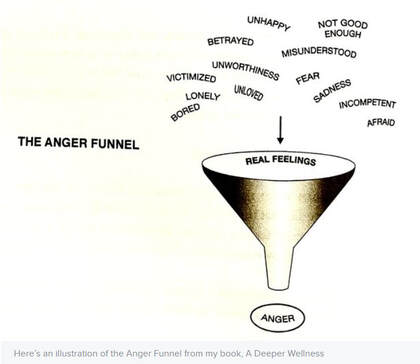
Anger itself is largely perceived as a secondary emotion that shows up when we feel we need to defend ourselves.

Most often, it's about OUR NEEDS.

What the anger is usually saying is ... when X happens (at home, work, in this relationship) I don't feel:
valued.
loved.
appreciated.
included.
understood.
seen.
heard.
special.

Am I right??
Picture
​Further reading: great article on anger here. (Image Cred. Monica Vermani C. Psych.)
​LEARNING TO RELEASE & PROCESS  ANGER.

Internalised anger and resentment acts like poison in the body, and  will eventually end up festering and eating away  at the container it is in.

The anger held deep down inside, has to come out sometime. It won't stay locked up forever.

Sudden outbursts, conflicts and arguments begin to show up in other areas of your life for no aparent reason - not just with the person you originally felt angered by.

So, what can you do to release and process before it festers?

How to process emotions is sadly not a skill they teach us at school. I call it a skill because it'rs super important to learn and it takes awareness and practice to master.

In my belief journaling the #1 way to process your emotions. Here's how you can get started:

TUNE INTO THE REAL SOURCE OF YOUR ANGER:

  1. What specifically is causing me to feel angry/irritated/frustrated?

  2. Is it really about this one thing, or is it more than that?

  3. How are my needs are not being met?

  4. Where am I holding anger in my body?
​
  5. Acknowledge the true feelings beneath your anger (acceptance) and ask - what do I need to do in order to be at peace?


From here, you'll get clear on the next best course of action.

J A N E L  B R I G G S
Thrive Mindset Coaching


And, as always if you need more guidance please reach out via DM. Learn more about my 1:1 coacing programs here. TimeLine Therapy is an incredible tool for guiding you to release anger (and various other negative emotions) from it's core and get to the root of the problem. 


Picture

​About the Author: Janel Briggs is a NLP and Timeline Therapy Practitioner on a mission to support women across Australia and Singapore in healing their professional anxieties, insecurities and imposter syndrome to build unwavering confidence and self-belief. The goal is to level up your life and career by learning how to to live fearless and anxiety free! Connect with Janel on social media via Linkedin or Instagram.

0 Comments
read more
<<Previous
Useful Links

Shop
About
Coaching
Free Affirmations List​
Home
Get in touch

Email: [email protected]
Picture
Picture
Stay Connected!
Subscribe and be the first to access new coaching content, news & updates.
SUBSCRIBE TODAY
By clicking “I accept” you confirm that you have read and accepted Janel Briggs’ Privacy Policy and Privacy Collection Notice.
Collection Notice    |     Privacy Policy    |    Terms and Conditions