• 1:1 Coaching
    • Rediscover Your Spark
    • Client Testimonials
  • Resources
    • Positive Affirmations
    • Guided Meditations
    • Books & Guides
  • Store
  • About
    • My Story
    • FAQ >
      • What is NLP and TimeLine Therapy?
      • What are limiting beliefs?
      • What are Negative Emotions
      • Relieving stress & anxiety
      • What is a growth mindset?
      • Can Meditation remove negative thoughts?
    • Contact
  • Blog
  • EWC
  • 1:1 Coaching
    • Rediscover Your Spark
    • Client Testimonials
  • Resources
    • Positive Affirmations
    • Guided Meditations
    • Books & Guides
  • Store
  • About
    • My Story
    • FAQ >
      • What is NLP and TimeLine Therapy?
      • What are limiting beliefs?
      • What are Negative Emotions
      • Relieving stress & anxiety
      • What is a growth mindset?
      • Can Meditation remove negative thoughts?
    • Contact
  • Blog
  • EWC
Thrive Mindset Coaching
  • 1:1 Coaching
    • Rediscover Your Spark
    • Client Testimonials
  • Resources
    • Positive Affirmations
    • Guided Meditations
    • Books & Guides
  • Store
  • About
    • My Story
    • FAQ >
      • What is NLP and TimeLine Therapy?
      • What are limiting beliefs?
      • What are Negative Emotions
      • Relieving stress & anxiety
      • What is a growth mindset?
      • Can Meditation remove negative thoughts?
    • Contact
  • Blog
  • EWC

THE NEXT CHAPTER

GUIDANCE FOR WOMEN NAVIGATING MAJOR LIFE TRANSITIONS & THE JOURNEY BACK TO THEMSELVES
Don't miss a thing! Subscribe for free weekly coaching inspiration and support
SUBSCRIBE NOW


    Author

    Janel Briggs
    Empowering Women to Become Fearless & Confident through Major Career & Life Transitions

    Categories

    All
    Affirmations
    Anxiety
    Burnout
    Business
    Career
    Christmas
    Coaching
    Communication
    Comparison
    Criticism
    Fear
    Fear Of Failure
    Goal
    Goal Setting
    Growth Mindset
    Habit Change
    Identity Crisis
    Imposter Syndrome
    Job Satisfaction
    Judgement
    Mental Health
    Mindfulness
    Mindset
    Morning Routine
    Overwhelm
    People Pleasing
    Perfectionism
    Relationships
    Self Care
    Self-care
    Stress
    Success
    Suicide Prevention
    Validation
    Values
    Worry

    RSS Feed

Back to Blog

Why Sleep Is the Foundation of Emotional Stability

22/1/2026

 
Picture
If you’ve been feeling more anxious, reactive, or emotionally fragile lately, it’s easy to assume you're just not coping as well as you 'should be'.

Lashing out when normally we’d be more rational.

Taking things more personally and becoming overly sensitive to other people’s comments or opinions.

At work, letting doubt set in after small interactions, or assuming the worst in situations we’d usually handle with perspective.
Over time, we internalise these reactions as a mindset problem. 
But it's not, it’s more often a sleep problem.

When our nervous system is simply running on empty, it can affect how we think, react, communicate, and interpret the world around us.

Think of a toddler who dropped their nap and is overtired? They become the most irrational crying-screaming human being on the planet! Think of a 5 year old who is overstimulated? They become as difficult to rangle as a herd of cats!

Adults are very much the same, we just get better at masking it.

One of the very first things I help women with in coaching is untangling the sleep puzzle. Because when we can establish a more regular sleep pattern, the shift in emotional resilience and day-to-day steadiness can be surprisingly profound.

Sleep is emotional regulation, not recovery alone.

Have you ever had a terrible night’s sleep that turned what is normally a manageable day into an emotional rollercoaster?? Where one small inconvenience sparked so much frustration it lead to tears and total overwhelm? 

Yes, I see you - I've been there too. Why on earth do we react like this?!


Research from Harvard Medical School shows that sleep plays a critical role in how the brain processes emotion. During sleep, particularly REM sleep, the brain integrates emotional experiences and lowers their intensity.

However, when sleep is compromised:
  • Anxiety increases
  • Emotional resilience drops
  • Small stressors feel overwhelming
  • Decision-making suffers​

A 2019 study from the University of California, Berkeley, aptly titled “Overanxious and Underslept” found that insufficient sleep can trigger up to a 30% increase in anxiety levels the following day.
What's even more eye opening?

The same research showed that deep NREM sleep acts like a natural anxiety inhibitor.
During this stage of sleep, the brain calms the emotional centres, lowers physiological stress responses, and prevents anxiety from escalating.

In simple terms: deep sleep helps your brain stand down from 'threat' mode.
For me, this is proof that sleep isn’t just a “nice to have”. It’s a foundational part of the equation and a practical tool we can use to care for and protect our nervous system.

That’s the mindset shift I want you to take away today.
Sleep is where emotional experiences are processed - without it, emotions stack up like bricks in a wall. There are only so many bricks we can carry before the wall cracks.

Why anxiety spikes when sleep drops

​When our sleep is discupted, activity increases activity in the amygdala, the brain’s fear and threat detection centre, while reducing regulation from the prefrontal cortex.

In real life, this looks like:

  • Heightened emotional reactivity
  • Reduced ability to self-soothe
  • Small stressors feeling overwhelming
  • Decision-making becoming harder

This is why women who are already high-functioning, capable, and driven often feel more distressed when sleep drops. Your system is doing its best, but without enough deep sleep, it simply doesn’t have the resources.
When I started sleeping better, my anxiety didn’t totally disappear - but it became more manageable again. I seemed to have more resilience and the world felt less against me.

Rest is important, but it isn’t the same as sleep

Many people believe they’re "resting" while laying on the couch or in bed, but their nervous system disagrees.

If you're scrolling, binge-watching TV, or working from bed this still keeps the brain stimulated.

The body may be still, but the mind is still processing and remains on alert! 

True rest (for mind and body) requires disengagement.

Generally, reading a book is the lowest stimulation for resting compared to screens, but it still engages the brain. Whether it feels restful or activating comes down to what you’re reading and why you’re reading it.

More likely to be restful:
  • Light fiction or familiar novels
  • Gentle, comforting books you’ve already read
  • Slow, immersive stories that don’t require problem-solving
  • Reading for pleasure (not to “learn” or optimize)

This kind of reading can help the nervous system downshift, especially in the evening and right before bed.

Reading that is more likely to be stimulating:
​
  • Non-fiction, self-development, or business books
  • Anything that sparks insight, ideas, or “I should be doing…” thoughts
  • Reading on a phone, tablet, or Kindle with notifications/light exposure
  • Reading with the intention of productivity or self-improvement

This keeps the brain in processing mode, even if your body is still!

If you love personal development books, my advice is always to read those in the morning or during the day, so your brain isn't stimulated at night thinking about all of the things you've just learned. 
If your body is resting but your mind is still ‘on’ then your system hasn’t stood down.

3 Practical Ways to Support Deeper Sleep

Here we go, now we're getting into the good stuff. First off, you don’t need a perfect routine but you do need consistency.

These three changes alone often create noticeable shifts for my clients:

1. Cut caffeine (and sugar) earlier than you think

Caffeine can remain in your system for up to 8 hours. If anxiety or racing thoughts are an issue, aim for no caffeine after 1pm to give your nervous system time to downshift and process the caffeine. That means coffee, green tea, matcha, chai, and most soft drinks. 

It’s also worth being mindful of heavily sugary foods and drinks. Sugar creates a quick energy spike followed by a slump, which often leads to craving more sugar or caffeine stimulation to “perk up” - keeping your nervous system in a cycle of highs and crashes rather than settling into rest.


2. Remove your phone from the bedroom

If you're in the habit of middle of the night wake ups, where you reach for your phone to check emails and notifications during the night, then my number 1 non-negotiable to break that habit (to help you get better quality sleep) is to place your phone in another room when you sleep.

Go back to using a traditional alarm clock for your morning alarm. Leave your phone in your en-suite or outside your bedroom door. Even brief screen exposure can spike alertness and make it harder to return to deep sleep.


3. Create a work and screen buffer before bed

Aim for no phone at least one hour before sleep, and no work two hours before bed. This creates a healthy boundary around technology and work that sends a clear signal to your brain that the day is complete and it’s safe to rest.

Many women also find that a short, guided sleep meditation helps close down the “open tabs” in the mind and relax the body into deeper sleep states.

Here's one I recorded for you: "Peaceful Sleep Guided Meditation"

No working from bed either! Think of your bedroom as your place of rest, we don't want the brain to be "on" think, think, thinking about all the things happening at work and our to-do list when you're trying to sleep.

The mindset shift: Deep sleep is essential for stress,  anxiety and emotional resilience

So how many hours of sleep should you aim for each night?

Ideally around eight hours. But if you’re currently averaging closer to six, don’t try to overhaul everything at once. Build your sleep in small, sustainable steps. This week, aim for 6.5 hours and focus on consistency: similar bedtimes in the evening and similar wake-up times in the morning.

Small shifts done consistently are what retrain your nervous system. Over time, those half-hour gains add up to deeper rest, steadier emotions, and a version of you that feels far more like yourself again.

Picture
0 Comments
read more
Back to Blog

Your Attention Is Exhausted (And That’s Why You Feel Anxious)

13/1/2026

 
January often arrives with a pressure to “start fresh” from January 1st, but this week I’ve been having very different conversations with my clients.

Women who are highly capable, emotionally intelligent, and deeply self-aware… yet feel flat, overwhelmed, and strangely disconnected from themselves. No where near feeling "fresh" and excited for the new year.

What I'm seeing is that their attention is too exhausted to even begin to think about  the step to start "New Year - New Me"!

We live in a world that expects or demands "instant" everything. That's created a habit of constantly fragmenting our focus in order to meet those expectations.

Every day we end up splitting our time multi-tasking to get everything done:

  • Answering emails during dinner
  • Processing work thoughts and issues while trying to sleep
  • Scrolling to “relax” our mind
  • Doing three things at once and calling it normal!

But your nervous system doesn’t experience that as normal. 

​It experiences it as never being safe enough to rest.

Why multitasking drains your emotional resilience

We are taught that multi-tasking is a productivity skill. It's something women do extremely well and often pride themselves on being able to juggle many things at one time. 

However, what they don't tell us is that multi-tasking is also a stress amplifier.

When your brain constantly switches from one task to the next task without closing down any of the tabs, it burns our brain's energy faster, reduces our emotional regulation, and unfortunately increases anxiety.

Over time, the more we mutli-task this shows up as:

  • Shorter patience
  • Poor sleep
  • Decision fatigue
  • Brain fog and burnout
  • A loss of clarity and confidence

As our brain never gets to fully recharge!

Which then leads to... you guessed it LESS PRODUCTIVITY! The one thing we're trying to achieve by multi-tasking.

Now, I know you probably love multi-tasking. I definitely used to, it was almot a badge of honor I wore. We all love being able to tick things off the list FASTER than lightning!

And you're probably reading this thinking there is no way I can stop multi-tasking, I'll never actually get anything done... 

And I get it, there are so many shifting priorities and deadlines to meet every single day.

So, if you can’t stop multitasking at work (and many can’t), start where you do have control.

Stop multi-tasking at home

One small practice I’ve been giving clients this week, to help calm their nervous system: 

  • Stop scrolling while watching TV (just scroll OR watch TV!)
  • Stop checking emails on your phone while eating ( just take 30mins to work OR eat and play music instead)
  • Cook meals without trying to answer emails at the same time (I've burnt dinner numerous times while trying to edit/post a reel!)
  • Stop listening to podcasts or watching TV while working (your brain will be grateful if you just pick one focus!)

Be intentional with your time!

Your brain has a limited attentional capacity. When you try to do two things that both require focus (reading emails + watching TV, listening in a meeting + replying to messages), your brain doesn’t split attention evenly.
 
Instead, it rapidly toggles between tasks. That toggling uses A LOT of mental energy.
 
Where you can = just focus on one thing at a time!
 
You'll feel more grounded, and it's a big first step to helping you be "more present" this year, if that is something that you're wanting to achieve.
Picture

If you work from home and find it hard to concentrate or stay motivated

If you work from home and notice your focus slipping, your motivation dropping, or the urge to multitask creeping in, this is important to understand:

Your brain doesn’t recover by pushing through. It recovers through rhythms of focus and rest.

One simple technique I often suggest to clients is based on the principle behind the Pomodoro Technique. Not as a productivity hack, but as a way to preserve brainpower and reduce mental fatigue.

The idea is simple:

Instead of working continuously until you’re exhausted, you work in short, intentional bursts of focus, followed by brief, regular breaks.

Research shows that taking breaks before you feel depleted helps:

  • Maintain concentration
  • Reduce mental overload
  • Extend emotional and cognitive stamina

In other words, you’re working with your brain, not against it.

What this can look like at home


Here’s an example of how this might work in real life scenario, especially if you’re juggling work and home responsibilities:

  • First work cycle: Write or focus on a work task 25mins
    Take a compulsory five-minute break when the cycle ends
  • Second work cycle: Prepare breakfast or attend to a simple home task
    Take another five-minute break
  • Third work cycle: Return to the unfinished work task 25mins
    End again with a five-minute break
  • Fourth work cycle: Complete another low-demand task 25mins
    Then extend the break to 10 minutes

This approach reduces the temptation to multitask because your brain knows:
“I don’t have to do everything at once, there’s a pause coming.”

Why this helps anxiety too

When your nervous system knows rest is built in, it doesn’t stay on high alert waiting for the next interuption of your attention.

Focus improves. Overwhelm eases. Mental energy lasts longer.

This is about protecting your attention and reducing exhaustion. Which is one of the most powerful ways to support emotional regulation and reduce anxiety.

Sleep is not optional for emotional regulation

Another theme I've been talking about A LOT this week with clients = SLEEP.

​Not just how many hours you lay there and close your eyes for, but also the quality of sleep you're getting. Which leads to how deeply your system is actually recharging  (or not) every night.

When sleep is compromised:
​
  • Anxiety increases
  • Emotional resilience drops
  • Everything feels harder than it should

 your nervous system is just tired.

Rebuilding boundaries is how you rebuild yourself

Weak boundaries around work, health, lifestyle, relationships don’t just affect your emotional state and energy levels,  they can also erode your sense of self as you continue to put everyone else's priorities BEFORE yourself. 
Over time, you lose:
  1. Emotional steadiness
  2. Confidence in your decisions
  3. Connection to who you are outside of productivity

This is the work I meet a lot of women and we do the work inside Rediscover Your Spark.
It’s a coaching program specifically designed for restoring energy, identity, and emotional stability so confidence can return naturally.

If this blog resonates and you'd like to learn more about these topics - reach out today!

~JB

Picture
Work With Janel
0 Comments
read more
Back to Blog

Setting Healthy Holiday Boundaries: Protecting Your Peace

16/12/2024

 
The holiday season can be a time of joy—but also a source of stress for many professional women managing demanding careers and family commitments.

Navigating holiday dynamics, whether at work or home, often brings pressure to meet expectations, resolve conflicts, and maintain harmony.

However, what I've come to realise is that learning how to set clear boundaries CAN transform this experience!

By managing your time and energy wisely (spending less time with people that drain you!) you can reduce stress, increase emotional resilience, and create space for meaningful experiences and more peaceful in your life.

WHY HEALTH BOUNDARIES MATTER

Setting boundaries isn’t about saying "no" to everything; it’s about saying "yes" to what aligns with your values, energy, and well-being. When you honor your own limits, you can show up more present and engaged in the moments that matter most.

I used to fall into the trap of doing everything for everyone. I was the problem solver and caretaker of my family, as many women are. But without boundaries at this time of year I would be an anxious mess in the weeks leading up to Christmas, my memories of past Christmases that didnt live up to my expectations playing on repeat - affecting my sleep, energy and mood. 

What I've learned is that boundaries aren't about being closed off—they're about protecting your well-being so you can show up at your best, personally and professionally. They'll help you to conserve your time, energy, and mental well-being—allowing you to feel more grounded.

The holiday season is notorious for its demands—extra events, financial pressures, emotional family dynamics, and the endless search for the perfect gift. When you don’t set boundaries, you risk spreading yourself too thin, leaving little room for the things that truly matter.
Picture

4 WAYS YOU CAN START SETTING HOLIDAY BOUNDARIES

​1. Prioritize Your Time and Energy
 
It’s impossible to be everywhere and do everything FOR EVERYONE—so don’t try! Instead, decide what’s truly important to you this season. Is it family movie nights? Baking cookies with your kids? Or maybe just some quiet mornings to recharge?

  • Action Tip: Make a list of your holiday “must-haves” and focus on these. Anything that doesn’t align with your priorities can be politely declined.
 
2. Communicate Expectations Clearly (and Kindly!)

Last week I wrote about the art of saying “no”! Setting boundaries requires open and honest communication with the people in your life. 
  • Action Tip: Whether it’s your boss, family, or friends, clearly articulate what you can and cannot commit to this season. AND what expectations you have, OR behaviour you will or will not allow.

To Family:

“I’m excited to celebrate together, but I can’t host all of Christmas lunch this year. I would appreciate if everyone can contribute (either a dish, or cash towards food etc).”

To Friends:

“I’d love to join the holiday party, but I can only stay for a couple of hours due to other commitments.”

To Your Boss:

“I’m happy to wrap up key projects before the holidays, but I won’t be available after December 23rd as I’ll be offline spending time with my family.”

Setting a Behavior Boundary:

“I understand you have a lot to say about (x topic), but I won’t engage in conversations that feel disrespectful or critical. Please, let's keep it positive and supportive, otherwise I'm tapping out.”

3. Protect Your Mental and Emotional Energy
 
As you know, family gatherings can bring joy—but also drama. It’s okay to limit your time with individuals who drain your energy or create tension.

  • Action Tip: Plan visits for shorter durations or choose neutral venues where you feel more at ease. If the conversation takes a negative turn, excuse yourself for a moment, get outside take a few deep breaths and some time to reset.
 
4. Follow Through with Consistency

Here's the reason why setting boundaries feels so hard, we KNOW that not everyone is going to like your boundaries. People may give you a snarky reply or talk behind your back. At the end of the day though, if they can't respect you and your wishes - then how much air time do they really deserve?? (yes, even if they are FAMILY!)
  • Action Tip: Be consistent in your message and direct to the point, no need to over explain. Some people may push back, they may not reply, or could try you  again. Remember their reaction isn't your responsibility. 

Your Peace, is your responsibility

No one else is going to be looking for ways to bring you more peace. Only you can do that. Now, it may take some uncomfortable conversations and a little practice at following through. But, you are ALWAYS worth it!  

Picture
​About the Author: 
Janel Briggs is a NLP and Timeline Therapy Practitioner on a mission to support women across the globe in overcoming their professional anxieties, imposter syndrome, fears and insecurities to build unwavering confidence and self-belief. Mindset Coaching is about empowering women to rise above self-doubt and become fearless leaders in the pursuit of life and career success! Connect with Janel on social media via Linkedin or Instagram.

Picture
0 Comments
read more
Back to Blog

The Hardest Question We Avoid Answering (But Need To)

2/12/2024

 
I've been speaking to a lot of women lately who are feeling the PRESSURE.

To do it all, to have it ALL TOGETHER, to give all their time-energy-service to everyone around them.

This pressure is UNREAL! (and exhausting)

But they're doing it. And yet, continue to feel like they are failing. 

​If you're feeling this way too - I always start with a simple question:

Do you LOVE and fully ACCEPT the woman you see in the mirror every morning?

Picture
I'll be honest, this is the No.1 question my client's find the hardest to answer!

Here's why.

Most of us struggle with self-acceptance. We're harsh and critical to the woman we see in the mirror.

She is never doing enough, constantly judging and comparing herself, holding impossible standards, and believes she just may not ever be good enough.

Like I mentioned in my last vlog
, our self-worth is often tied to "conditions".

Eg. external factors like possessions, achievements, or other people's opinions.


But the truth is, you are inherently valuable—just as you are.


​Doing what you can, to the best of your ability with the energy and time you have today - IS ENOUGH!

And when you begin to realise this - the self-inflicted pressure begins to DISSOLVE. Setting boundaries with people and at work becomes easier. Your resilience towards stress improves.
When you learn to love & accept the woman in the mirror... she becomes capable of things you could never EVEN imagine! ~ JB

If you're ready to learn love the woman you see in the mirror (with radical self-acceptance!)

Watch above, as I share a  snippet of coaching (under 3mins!) on:

🌟 Why our self-love often feels conditional
🌟 How societal pressures shape our self-worth
🌟3 actionable tips to start breaking free from those conditions and relieve that pressure! 
 
If this message resonates with you, please share it with a woman who also needs this reminder! 

Picture
​About the Author: 
Janel Briggs is a NLP and Timeline Therapy Practitioner on a mission to support women across the globe in overcoming their professional anxieties, imposter syndrome, fears and insecurities to build unwavering confidence and self-belief. Mindset Coaching is about empowering women to rise above self-doubt and become fearless leaders in the pursuit of life and career success! Connect with Janel on social media via Linkedin or Instagram.
Picture
0 Comments
read more
Back to Blog

When Life Turns Upside Down: Recognizing a Lifequake

5/11/2024


Have you ever had that sinking feeling that life, as you know it was crumbling beneath your feet?

Yes well, that’s exactly what I've felt this year.

I most certainly did not have a “Lifequake” on my bingo card for 2024. Predonimantly caused by a decision my family made to move from my beloved Singapore in Asia, to Florida, USA for my husband's job mid-year. 

Navigating this move seemed easy on the "outlook". But throw in a steep learning curve on natural disasters as we were thrust into two major hurricane evacuations upon arrival, a lengthy furniture shipment delay leaving us in an empty house, two personal injuries (one after the other!) that had me hobbling for weeks, AND just last week a bout of emergency surgery for my son's appendicitis...

I'm just about all out of "sanity" by this point!

The bigger issue here - all of these challenges have meant I've needed to pause and take time off launching my coaching into the USA timezone to reacquaint my nervous system with:

a) my new environment, and
b) this ever evolving version of myself

If you’ve ever felt or experienced something like a “lifequake” before - you'll know there is only one way to explain it... 

It’s extremely UNCOMFORTABLE!

And of course, life must go on, so you do your best to keep things together. While feeling like the LIFE you had carefully constructed is slowly but surely falling apart under your feet.
Picture

What is a Lifequake?

A lifequake is more than just a life change; it’s a deep, pivotal shift that redefines your path and perspective.  

  • Lifequakes often come uninvited and without warning, shaking the very core of who you are and how you see yourself.
  • Think of it like a personal earthquake that affects not just your outer world but also your inner sense of stability and direction. 
  • Most people go through at least three in their lifetime. Some are planned, like changing careers or starting a family, while others are unexpected, like a sudden illness, complex grief or the end of a marriage.  

​Lifequakes tend to mark the start of a transitional phase, one that can last months or even years, where you’re adjusting to a “new normal.” 

How to Recognize When You're In A Lifequake Transition

From my personal experience, the first step to navigating a lifequake is to recognize that you’re actually in one!

Sometimes we’re so caught up in the busy stress of every day life that we don’t even realize we’re going through a transformation.

Here are some signs you may be in a life transition: 
​
  1. Uncertainty about the Future: The goals or identity that once felt “concrete” and guided you, no longer hold the same relevance. You find yourself unsure of what you want, and with so much “change” the future you envisioned feels less certain.  
  2. Overwhelming Emotions: Life transitions often bring a surge of emotions, ranging from anxiety, sadness and grief to frustration and confusion. It’s as if you’re shedding an old skin, and it can feel uncomfortable. 
  3. Questioning Your Identity: When lifequakes strike, they often shake the foundations of our “sense of self”. You may start questioning who you are, especially if the change disrupts roles that have defined you, such as being a spouse, in a specific profession, or a playing a role within your family unit. \
  4. Feeling Stuck or Directionless: You’re moving forward, but it feels like you’re wading through mud. You might feel lost or trapped between who you used to be and who you’re becoming.
Picture

My biggest learning from this entire experience...

Lifequakes, as challenging as they are, have a way of guiding us toward growth and new possibilities.

Even if they don’t reveal the full picture right away.  

This transition can feel overwhelming, but please know it’s also an invitation to  perhaps rediscover yourself and redefine what truly matters for you at this stage of your life. 

In my blog next week (yes, there is a Part 2!)...

I’ll share simple mindset shifts you can make that will help you find more clarity, resilience, and purpose as you navigate through this season of change. 

It's the exact things I’ve been doing this year that have helped me immensly. 

Picture
If you enjoyed reading this blog, subscribe to my email today and get the next one straight to your inbox!
Subscribe Here
0 Comments
read more
Back to Blog

Learning to Love Yourself Better

11/4/2024

 
Picture
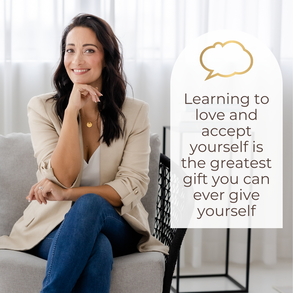
Learning to love and accept yourself is the greatest gift you’ll ever give yourself.

It's better than that expensive designer bag on your wish list.

Better than those new shoes you've been eyeing off.

And yes, even better than the Euro summer vacation you're no doubt dreaming of!

Problems and challenges don’t fix themselves by doing a geographical for 2 weeks or hitting the shops for a dose of retail therapy.

After the dopamine hit is gone, and the holiday glow fades, you’re still stuck with the same thoughts, behaviours, and stress you had before.
 
What I’ve come to understand on my journey as a coach is that self-love and acceptance doesn’t come easy for most women.

We are our own worst critic. We are the first to blame, body shame, call ourselves stupid, useless, and much much worse.
​
Growing up the concept of self-kindness wasn't always taught to us by the women in our circle, or by teachers at our schools. And sources like social media have become a minefield of judgement and comparison.

However, self-love and acceptance are the two biggest foundations for a positive and fulfilling life!​


​1) Loving yourself enables you to cultivate healthier relationships with others.

​

When you know your own worth, you are less likely to seek validation from external sources and can form genuine connections based on mutual respect and understanding.
 
2) Self-love equips you with the resilience to bounce back from setbacks and challenges.

You develop a deeper sense of self-trust and inner strength, allowing you to face difficulties with courage and grace.
 
3) By embracing self-acceptance, you free yourself from the trap of comparison and perfectionism.

Your inner critic become less concerned with measuring up to others' standards and more focused on nurturing your unique strengths and qualities.
Picture

But of course, the million-dollar question is…

“If I was never taught how to love and accept myself, then where do I even begin?” 
 
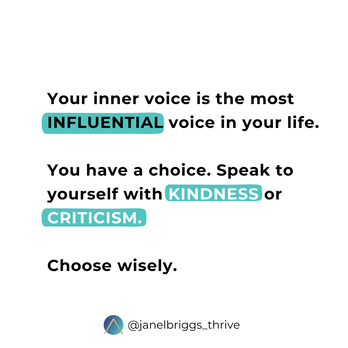
✨ Start by becoming aware of your critical thoughts, feelings, and self-talk
 
✨ Commit to treating yourself with the same kindness and understanding that you would offer to a close friend
 
✨ When you walk past that mirror – what would you say to your bestie? Would you ridicule her and tear her down OR would you show her compassion and pump up her tires?
 
You always have a choice; you can continue the path you’ve been on and keep get the same results. Or you can make a change and BE the source of love and acceptance in your own life.

 

Picture
About the Author: 
Janel Briggs is an Author, Mindset Coach, Practitioner of NLP and Timeline Therapy on a mission to support women across the world in overcoming their  anxiety - personal insecurities and professional fears - to build unwavering confidence and self-belief. Mindset Coaching aims to help you fearlessly elevate your life and career, and more importantly the relationship you have with yourself! Connect with Janel on social media via Linkedin or Instagram.

Picture
0 Comments
read more
Back to Blog

Where Are You on the Priority List?

3/3/2024

 
Here's a reflection for all the care-takers out there. The mothers, fur-mama's and women in relationships who spend most of their time caring and holding space for other people (whether it be your partner, children, family, or in your friendships).

I want to ask you a question:

Where are you on the priority list of your life?

​Recently, I had to ask myself this question. And it's VERY interesting what came up!
 
Last week my husband and I decided to invest in private 1:1 coaching for our son (who is 10yo) for a sport he loves. This coaching would help him to build more confidence and fine tune his skills. I did my research, got a referral, and the quote came back at $200 for a number of sessions. 

It was literally a split-second decision - YES, let's do it!

Within 24hrs the first session was set up. It was a "no-brainer" for us to spend $200 on our son's progression in this sport, his happiness is high on our priority list.
​

On the flipside, I reflected on how I would have responded if the tables were turned a few years ago. I wondered how long it would have taken me to DECIDED to spend that same $200 on myself??


Perhaps you could ask yourself the same thing?

I can tell you, the decision would have taken wayyyy longer than 24hrs!! My mind would have been spinning thinking about all the justifications, the pro's and con's, in an attempt to ward off the overwhelming feeling of... GUILT.
​
"I can't do that, I can't spend that much on myself... it's too much! I'll find another way. I'll get another quote. I'll wait to see if I REALLY NEED IT."
​

Picture

You may have had a similar response or mindset too?

I've had clients tell me they're kids are always dressed in the best clothes - yet they're still wearing those old shoes with the hole in them they bought 5 years ago!
​
Or, they'll even pay for the finest food, toys and new beds for they're fur babies - yet they're still using a broken hair brush from 2012!

Or, they won't even blink an eye at loaning a family member or friend money to support their idea or dream - yet won't do the same for themselves!
​

WHY ARE WE LIKE THIS??

Honestly, I believe it comes down to priority and self-value. Where we place ourselves on our own priority list matters.

We forget about how important it is to invest in ourselves, in our own progression, healing and growth.

I can tell you that in every decision I used to make - I was at the bottom of my priority list.
Somehow in my role as the "responsible care-taker" in my immediate and extended family I thought else's needs came before mine.

What I came to realise (after hitting a rock bottom with my mental health in 2017!) is that my needs and taking care of myself HAD to come FIRST.

I needed to be a top priority in my life, instead of bottom of the list.
​

If I couldn't make myself a priority and voice my needs - then how would anyone else ever make me a priority too? 
​


​My last questions for you is this:

How can you move yourself up the priority list this week

  • Understand where you are on your own priority list
  • Put time and energy into shifting your mindset focusing on your needs
  • Release the guilt & do the thing!

​And if you have any questions or comments on how to get started - please reach out!


Picture
About the Author: 
Janel Briggs is an Author, Mindset Coach, Practitioner of NLP and Timeline Therapy on a mission to support women across the world in overcoming their  anxiety - personal insecurities and professional fears - to build unwavering confidence and self-belief. Mindset Coaching aims to help you fearlessly elevate your life and career, and more importantly the relationship you have with yourself! Connect with Janel on social media via Linkedin or Instagram.

Picture
0 Comments
read more
Back to Blog

When Christmas Isn't Sparking JOY

17/12/2023

 
This time of year can bring up big emotions for people. 

Not only do we have the overwhelming rush to the end of year finish line, but we also have so much added stress with “Christmas is coming”. 

I want you to know that if you are not joyously cruising into Christmas and the end of year, it’s OK.
You are not alone.  

Picture

You're not a bad person or the “Christmas Grinch”.  ​

​You’re probably just extremely overwhelmed, burnt out, beyond tired and perhaps at capacity with everyone and everything!

Christmas and the new year often brings up anxiety!  

I know this feeling. I spent a few years of my life dreading Christmas day and  the stress that comes from juggling “family relationships" and having to “act normal” when I felt way less than normal.  

It’s plain hard to be joyful when your mind feels scrambled and you've got zero energy left in the tank.  
​
Not to mention that pressure of staring down the road to 2024 … thinking what am I doing with my life? Why am I still so far away from where I should be? And how the hell am I going grin and bear it and avoid these questions from people at all those Christmas parties?! 

​
Picture

If you resonate with any of this, here is an approach for you

​If you resonate with any of this, here is an approach for you:

Honour your feelings. 
 
It’s OK to be feeling this way, there are many other who feel the same right now too but probably aren't talking about it.
There’s no doubt you’ve been juggling a lot this year and likely just need time and space to process your thoughts, feelings and emotions.  

It’s ok to say No. 
 
I remember one year when my family asked me to host Christmas Day lunch and I was struggling with my mental health. My anxiety immediately triggered at the thought of seeing everyone in my home roll up with Esky’s full of alcohol and drinking all day.
I knew that my head and nervous system could not handle any alcohol fueled arguments or stress.  
 
So, with the help of my mentor I crafted some words to create a boundary that honoured my feelings. I wrote to each family member and told them I would host, but if it was at my house, it would be an alcohol-free day. They agreed, respected my wishes and came along. They ate the food, opened presents, left early and went on to be merry somewhere else!
By all accounts for me it was a GREAT DAY. Zero anxiety, and lots of laughs. 

Focus on self-care.    

Perhaps this is what your holiday break is about, a time for rest and recharge rather than all the Christmas ‘tis. Less giving energy out, more recouping energy in. Do things that bring you comfort and relaxation.

You don’t have to have it all figured out by December 31st.  

In actual fact December 31 is just another day in the calendar. Take a breath and release the pressure. Everything will work itself out in time. Go slow and be kind to yourself.  Ande let this be your reminder to take a breather. You can and you will get to that end of year finish line. 

 
And please take care out there, if you're stressed and emotions are high remember that there are many others that are too. 

All the best,
​JB.

Picture
​About the Author: 

Janel Briggs is an Author, Mindset Coach, Practitioner of NLP and Timeline Therapy on a mission to support women across the world in overcoming their  anxiety - personal insecurities and professional fears - to build unwavering confidence and self-belief. Mindset Coaching aims to help you fearlessly elevate your life and career, and more importantly the relationship you have with yourself! Connect with Janel on social media via Linkedin or Instagram.

0 Comments
read more
Back to Blog

In Times of World Crisis: Navigating the Storm Together

15/10/2023


Phew... well, this past week has been A LOT to process, hasn't it?
 
I've felt it too, the sense of confusion, helplessness, and overwhelming emotions from witnessing a world and people in crisis. Sick to my stomach reading and listening to the news, hearing the division and clash of words, opinions, and beliefs all over social media on topics that are far away and closer to home.
 
As we’ve seen for hundreds and thousands of years, division brings destruction. Sadly, I have no solution or answers for you.

But I do know that we’ll never be able to right the wrongs of the past with the same thinking that got us here. Often in times like these, when the world-fear and anxiety storm rages I get a little quieter. I go inward to reflect, process my emotions, pray for humanity and peace, and I count my blessings.
 
 I also put in place a few essential practices that assist my mindset:

  
  • Unfollow – it’s ok to mute or unfollow people on social media. If a person's opinions, beliefs or values differ and their content triggers you  just step away. No amount of "reasoning" will ever change their opinion or belief system.

  • Limit the time - it’s also ok to place boundaries around people you will and won’t see if there is potential for conversations that trigger you. Your peace and serenity is most important.

  • Reduce news/social media – checking in once a day, during the middle of the day is my best advice. Waking up in bed scrolling as soon as your eyes open to read the horrific news, or right before you shut your eyes for sleep (when you are less emotionally resilient) isn’t great for your mindset. Even further, when I feel “raw” I ask my husband to filter the news for me and just give me the high level facts.
​
  • Journalling – write out your feelings. As simple as it sounds it’s extremely powerful to get the thoughts and emotions circling in your mind released onto paper. This is the process I share with clients in coaching: “Dear X (person, community, country etc) this is what I have to say to you …” and let your pen flow let it all out.

  • Spead loving-kindness – you may not be able to affect what’s happening in the world on the wider scale, but you can impact the community around us with your good energy. We are all humans living on the same earth, we can pray for unity, peace and humanity.

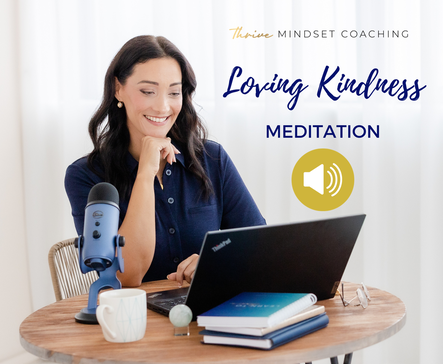
If you're struggling with feelings of hopelessness and sadness from the weight of division in our world I recorded a special meditation for your this week. It's based on an ancient practice that cultivates goodwill and universal friendliness towards oneself and others. 
Picture
Listen Here
After I have done all I can to tackle my emotions and educate myself on a tough problem, this recording helps me to re-focus my mind and nurture my spirit.
Then I'll perhaps take a walk, listen to music, meet a friend for a chat, eat something nutritious, read a good book, go for a bike ride or take a nap. These are all constructive ways to support my mindset to fill time that might otherwise have been wasted on worry about all the uncontrollable's in our world today. 
​Take care, JB

Picture

​About the Author:
 Janel Briggs is a NLP and Timeline Therapy Practitioner on a mission to support women across Australia and Singapore in overcoming their professional anxieties, imposter syndrome, fears and insecurities to build unwavering confidence and self-belief. Mindset Coaching is about learning how to  become fearless and level up your life and career!
 Connect with Janel on social media via Linkedin or Instagram.
0 Comments
read more
Useful Links

Shop
About
Coaching
Free Affirmations List​
Home
Get in touch

Email: [email protected]
Picture
Picture
Stay Connected!
Subscribe and be the first to access new coaching content, news & updates.
SUBSCRIBE TODAY
By clicking “I accept” you confirm that you have read and accepted Janel Briggs’ Privacy Policy and Privacy Collection Notice.
Collection Notice    |     Privacy Policy    |    Terms and Conditions