AuthorJanel Briggs Categories
All
|
Back to Blog
How to Silence Your Inner Critic15/11/2022  How often do you listen to the voice of your inner critic? Does the sound of this voice propel you forward in your work and life? OR does it hold you back? What if I told you we have two voices within our mind available to us for counsel at any time. Your inner critic doesn’t have to be at the forefront running the show 24/7. You can learn to dial down that self-criticism and tap into the much quieter, more gentle voice. The voice that often goes unnoticed, the voice of self-compassion. Your inner critic is that annoying voice of negative criticism, that’s often playing on repeat. If you are new to exploring your mind an how it operates, your inner critic is that voice that tells you (on loud speakers) that everything you do is wrong. It’s typically fuelled by fear and self-doubt, speaking in a berating and belittling tone of resounding “you are not good enough” dialogue. It may tell you that other people are doing better than you, and that you can’t cope in difficult situations. It may bring up flash backs of painful memories of the past, and send warning bells of anxiety or blame you for things going wrong. It may even tell you that you will never succeed, or that you are not worthy of the job, role or relationship that you are in. The inner critic can be very convincing and sometimes even convinces the most successful person to doubt themselves. When you listen to this tone of negative commentary, you’re likely to beat yourself up over little mistakes and imperfections. I have a client who is very successful in her career, but also highly critical of herself. Achievement’s do not come without excess stress as a perfectionist who is anxious about making mistakes and failing. Her inner critic says things like: "You better not mess this up, then people will know you're not good enough” and “what if you fail? People will think you don’t have the experience”. In reality, and on paper NONE of this is true. But when the inner critic is on loudspeaker the worry and angst causes sleepless nights and health concerns. It's fuelled by fear and speaks in a berating and belittling tone of self-doubt. Your inner critic main purpose is to keep you safe and help you understand what can be improved in the future. It is part of your mind’s self-protection system, fuelled at its core by fear and unresolved limiting beliefs. It may even be holding onto memories of moments in your life or childhood where you’ve experienced criticism or taken risks that perhaps didn’t pay off. The mind never forgets and as it takes everything personally it continues pre-empt events that may happen in the future that could be similar. The inner critic says: “Don’t put yourself out there, remember what happened last time? That’s right, you were X (rejected/teased/laughed at/didn’t belong there)”. Sometimes this self-protection can be helpful - it might be useful to have an internal dialogue of caution or offer suggestions for ways we could improve our work, decisions and/or mistakes. But where the inner critic becomes a problem is when it takes up most of our conscious thoughts and drives us to self-sabotaging behaviours where we avoid taking action altogether. Your inner critic may be motivated by a fear of failure, rejection, or being judged. Perhaps you've had experiences in the past where other people have treated you poorly or someone really criticised you which made you feel judged, and your self-belief plummeted. Or, maybe in your family of origin failure wasn’t an option, winning and achieving was believed to be all that mattered so you thrived on this external validation. Whatever the reason may be for this fear of being judged or rejected by others, remember that it's only happening inside your mind. Your thoughts and beliefs can be changed. It might be helpful to ask yourself where this fear is coming from? Despite what your inner critic may say about other people's opinion about who you are as a person, everyone has their own unique talents and abilities—and you have so much to offer this world! It’s time to shut out your inner critic and tap into your voice of self-compassion. When you notice your inner critic begin to ramp up, a really simple technique to practice is to catch the first negative thought you hear without acting on it. Then take a deep breath and quiet that noise by tapping in for a moment to become curious and ask yourself: “What am I afraid of here? Is this a real fear or a perceived fear? What do I know to be true?” Then listen for the voice of self-compassion. It will be a quieter voice, speaking softly with words of kindness, and acceptance. “Compassion brings mental peace and mental comfort” – HH Dalai Lama Your voice of self-compassion could sound like:
You’ll then begin to have a completely different experience and a less stress fuelled outcome as higher levels of self-compassion are linked to decreased feelings of anxiety and depression. Here are some things you can do to silence your inner critic to hear the voice of self-compassion:
So, the next time you hear that voice telling you to give up, or not even try because you’re not good enough or you might fail – remember that you don't have to listen to that critical voice anymore! Instead, take a moment to pause, breathe and ask yourself which voice is talking? Always choose the voice of self-compassion. 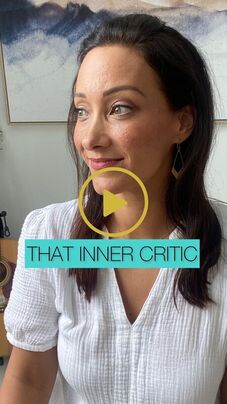
0 Comments
Back to Blog
Carrying the Mental Load: at Capacity16/9/2022 As a Mindset Coach, who coaches high achieving women on how to release fear, limiting beliefs and anxiety, I frequenstly get this question: “WHY am I so stressed out, overwhelmed and exhausted ALL THE TIME? I just can’t seem to keep life together like everyone else.” My immediate answer is this: “ When is the last time you gave yourself time and space for REFLECTION?” We get into the habit of packing so much into an already filled container, thinking that everything is urgent, so much to do in so little time. We want to:
Not to mention that fear of FOMO is real. I get it. We get so busy “being busy” that the mind goes into INFORMATION OVERLOAD. It simply cannot process and keep up with the pace we are expecting ourselves to run at. If we look at what is happening in the mind, we have approximately 2 million bits of information coming at us every day (2 million!). We have external information screaming at us from our technology - phones, laptops, ipads, work emails, phone calls, text messages, social media notifications, reminders. And if you have a child in care or at school… let’s not forget ALL the newsletters and emails and notifications!! Plus, we have the information that is internally processing our own beliefs, thoughts, internal dialogue feelings, emotions. What you can hear, see and smell. And the brain processing sensory information getting feedback from our organs. But, the mind can only process 148 bits of information. Yes, that 2 million bits of information gets filtered down by the mind’s ability to delete, distort and generalise the information. It will in fact only retain the information it believes you need sifting on past experiences, memories and your core belief system to understand what is needed. If we don’t make time for reflection going into a “REST + PROCESS” mode and we continue to pack information into an already filled container guess what happens?? System overload: overwhelm, stress, anxiety, resentment, decision fatigue and burnout from carrying the mental load. The mind says “I AM AT CAPACITY!”. And yet, we keep push on expecting to somehow get a different result. So, if your mind is at full capacity - what can you do this week to reduce the mental load? Often, we think it’s big things like taking a day off work for self care, or a weekend away which does help. But, sometimes that isn’t feasible. I am all about starting small with mindfulness habits like:
In order to keep a healthy work-life balance, with less likelihood of overwhelm we need to be mindful of how we fill our brains with information throughout the day. When we give ourselves time in stillness and quiet, we turn on the mind’s “REST + REFLECT” mode. By packing in fewer tasks in, taking breaks and making sure we schedule some time for mindfulness, we can truly reap the benefits. You might even be surprised by the creative ideas and solutions that filter in more easily and effortlessly. 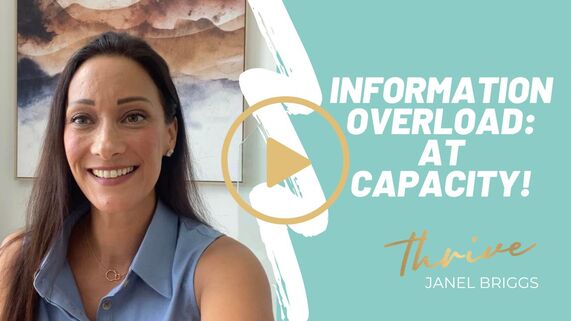
Back to Blog
 It's easy to be stuck in comparison. It's easy to look at the people around us and think that they must have it better. More money or a better job, or a more fulfilling life than we do. But what if I told you that when you compare, you lose. When we compare ourselves to others, we are benchmarking our personal outcome on someone else’s game plan, and hand over our power to the ego. That's why it's so important for us not only to understand how comparison works but also learn how we can overcome its negative effects on our lives. Be careful of what you compare yourself to. Why is comparison usually a losing game? When we compare, we're focused on what is lacking in our lives instead of celebrating what is present. We don't have enough money; they have more money. We don't have the same job title or position as someone else; they do. We don't have the same qualities as someone; they are more interesting, attractive or funny. This thought process leads to whittling away our self-worth, instead of creating a mindset that celebrates our unique qualities and finds happiness in what we already have. Comparison also leads to judgement, setting up an impossible standard by which we judge others against ourselves and other. Judgement is the king of separation and the biggest killer of connection. When you judge someone maybe you’ll come out feeling better about yourself in the judgement stakes this time, and give yourself a shot of confidence boost. But the ego can never be content, it always wants more. Next time you are bound to feel worse and this comparison will not bring you true self-belief or contentment. That’s takes inner work. “The best way to stop feeling that I’m not good enough is to stop comparing altogether.” - Courage to Change, AFGBelieve that you can achieve it, no matter how hard it seems. If you want to achieve your goals, it’s important to believe that you can do it. Believing in yourself, your abilities and having a laser focus on running your own race is the key to success. It’s easy for us all to fall into the trap of comparing ourselves with others and feeling like our outcomes aren’t as good as theirs. But remember: no two people have the same game plan or approach to achieving their life goals – they are unique, and so are you! Let go of any belief that you're not worthy of success. You are as capable of achieving success as anyone else in this world. You can and you will, you just need to shift your mindset and belief system. The only obstacle standing in your way is the belief that you aren't worthy or deserving of it, which causes all the self-doubt. The voice inside your head that says, "I'm not good enough" or "I don't deserve this." This may be news to you - that old voice is just a reflection of other people's doubts and fears, not yours! It takes a lot of courage to let go of those beliefs instead of comparing yourself to others who have already finished theirs. For shifting belief systems I am a firm believer in using positive affirmation statements. I have a list of over 150 affirmations as a free download on my website. You could begin with a statement like this: "I deserve success. I create a life that is full of abundance. I am worthy of these incredible opportunities." Remember why you're doing the things that you are doing in the first place. It's easy to get lost in the comparison game, but remember why you're doing the things that you are doing in the first place. You didn't choose a challenging workout or a new diet because it was fun, right? You're a high achiever because you love the challenge. Instead, these things are part of your journey toward something bigger—they are an essential part of reaching your goals. As Simon Sinek says "Always go back to reconnecting with your WHY." Instead of focusing on what others are doing and judging yourself based on their results, refocus on why you're putting in all this effort in the first place. Remind yourself of your purpose, this is often why people love creating vision boards to much. Having a visual representation of your personal goals keeps you on track to what is most important for you. This will help remind you not only where you want to go but also why it matters so much for you to get there. 4 Keys to Remember to Start Living a Happier Life (without comparison).
Ultimately when we compare ourselves with others too much, our goals seem further away and less important because there are other people who have already done it first, or better. But in reality no one can ever do it like you! Every journey is different—and yours will take exactly as long as it needs to take. The next time you feel like you're stuck in a rut, remember to look at what is really going on here. Are you comparing yourself to someone else? Or are you holding yourself back because of some belief that has been ingrained in your unconscious mind? If so, then it's time to take a step back and reevaluate what it means for success in your own life by focusing on what makes us different instead of trying hard enough to be exactly like everyone else. 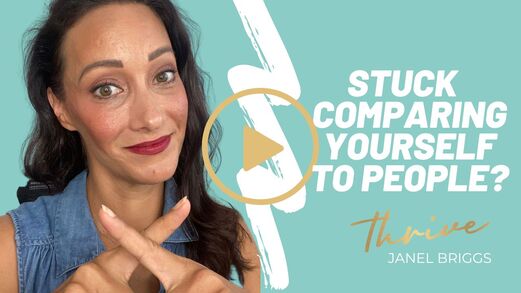
Back to Blog
Are some people just LUCKY?12/8/2022  I have a question for you today, do you believe… some people are just lucky?
Do you believe that opportunities only come once in a lifetime? That your time is running out? Pressure to make big life decisions as you only get once shot? If you do… then I want to share something with you today. I had a conversation with a beautiful woman here In Singapore the other day and I wanted to share it with you. If you haven't caught up yet - my family has been living in Singapore since the end of March. We decided after living through the pandemic in Melbourne Australia it was time for a change, a BIG change. This woman reached out to me on Instagram and said “You are so lucky getting to travel and live and work abroad. I could never do that". And I replied: "Thank you, but it is not LUCK. Nothing we have created has happened by chance." It may look like I am the swan, swanning around on that pond gliding smoothly across the water. But, I can assure you that underneath the water I have been peddling my legs in momentum for YEARS. This is the outcome of doing the "inner work". This is what my peddling under the water actually looks like:
If you are feeling pressure, like time is running out, you might be in a fixed mindset that says "opportunities only come once in a lifetime". The truth is that opportunities come to us every day. And, every day we are given a choice. Are you running on autopilot, reacting and responding the same way you always have getting the same outcomes? Or are open to new perspectives, fresh ways of looking at life problems? If you need guidance here, a simple mindset shift can be created with this powerful affirmation: Opportunities come to me each and every day. I welcome new people and good energy into my life. I am excited for this amazing job opportunity and purposeful work into my life. Write it, speak it, repeat it daily for the next 90 days, and watch what happens. You’re beliefs, your thoughts, your words become the catalyst for all that happens in your life! I used this exact process in my morning routine for the past 90 days. I was feeling restricted by my dependent visa status here in Singapore being unable to work and coach the women I meet locally. Every day wrote in my journal and I focused my mind on what I really wanted. To help and be of service here helping women release their fears and anxiety. Then I submitted my application 60 days ago. I found out this week that my Singapore business entity registration was approved! It all happened easily and effortlessly! I am grateful and beyond thrilled for this outcome. All that is happening right now in my life is another reinvention of the next phase of my life, where I am the author. And there is nothing more empowering than become the author of your life. I reinvented myself at 39 years old and I became the master of my emotions. I worked with an incredible mindset coach and I let go of my deep seeded fears. I started living to my true beliefs and values. I no longer operated on someone else’s belief system or programming. In doing so, the world opened up to me and at 40 I changed career paths to help women rebuild their self-belief. And now at 45 my family and I are reinventing the world we live in by being here in Singapore, following what lights us up - and now sharing this experience and culture with our son. It all had to start with me. No one else was going to save me or create this for me. So, my message for you today - is that if you are unhappy with any element of your life - you and only you have the power to change this. Time is NOT RUNNING OUT. It’s time to stop waiting for your luck and open your heart to the belief that opportunities will come to you. You have everything within you to succeed, at whatever it is that your dream of. They key is unlocking your best mindset. Releasing the mental blocks that tell you - you can’t. Reprogramming old belief and fear stories and learning how to shift your negative self talk. In doing this, you will become free to be the author of your life. It's your time to thrive. Janel Briggs THRIVE MINDSET COACH
Back to Blog
 We all have limiting beliefs. They’re those pesky, damaging, and deeply ingrained thoughts that’ve been there for years. So long in fact that we’ve become convinced that they must be true. They’re not. Trust me. I’ve been there and come out the other side and want you too as well. So what are limiting beliefs? Where did them come from? And how can we get rid of them? Limiting beliefs reach across all aspects of your life. They’re thoughts or opinions that negatively impact your relationships, growth, and moving forward. They’re the little (or loud) voice saying… I’m not good enough, smart enough, pretty enough. I’m too loud, too much, too clumsy. I don’t deserve this. I could never do that. I know I’m going to fail. During my study of timeline therapy and Neuro Linguistics Programming (NLP) coaching certification, I came to understand, and now coach, that most of our core beliefs, or how we feel or what we think about ourselves, are language patterns and programming from childhood. They’re developed when we’re young from a particular moment (or moments) in time. Influenced by family, friends, culture, school, or society in general, someone said something, or you overheard something and, for better or for worse, you decided (consciously or unconsciously) to take on their opinion or label and carry it as your own. As your truth. You start believing what you heard. And over the months, years, and decades, the words become ingrained “truths” and limiting beliefs that end up adversely effecting and impacting your confidence, self-esteem, and self-belief. And as we humans tend to do, we remember these negatives much more than the positives, making so much easier to believe these un-truths. So now that we’ve talked about what limiting beliefs are and where they come from, let’s talk about two ways STOP and reverse these thought and beliefs about yourself. AFFIRM\NATIONS
Affirmation are essential in countering decades of negative programming, self-talk, and limiting beliefs. The three steps to using affirmations are personalisation, repetition, and trust. Personalisation Make sure your affirmations are specific and personalised to you. Start each statement with “I am…” and make sure they are ALWAYS positive. No won’ts, don’ts, or I’ll try’s. Think “I am brave” or “I am courageous”, not “I wish I was brave” or “I want to be courageous”. Repetition Repeat, repeat, repeat. Write your affirmation in your journal (you can get mine here). Record and listen to them on your phone. Put sticky notes up around your home. Write, read, and hear them often. Use the same affirmations day in and day out until you truly feel and believe each statement. Trust As difficult (and strange) as it might seem, you really do need to trust the affirmation process. While it won’t happen overnight, repeating your statements focuses the forces of energy to bring light to your desired result. Trust and believe good is coming your way and see the magic unfold. To help you get started, or continue on your affirmation journey, visit my website to download my free 150 Positive Affirmations list. DEEP (GUIDED) WORK While affirmations help you move forward, actually getting rid of limiting beliefs often takes deeper work. The key to this deep work however is doing it with guidance. Trying to “do the work” without guidance can be difficult, frustrating, and potentially upsetting. By having a safe space to discover your underlying limiting beliefs and be guided through a process to transform these into empowering new beliefs you become your own “inner mentor”, confident and able to go forward. So you’re not alone in the deeper work, I run a small and intimate “Silencing Your Inner Critic” group workshop every month. Together over zoom we work together for 2 hours from the comfort of your own home on:
Limiting beliefs are just that, limiting. While they’re familiar and known, they also tend to keep us surviving and not thriving. They keep us stuck in the past unable to make real progress forwards. Instead let’s get you thriving. Let’s get you working on reprograming your beliefs. Let me help you build unwavering self-belief and get rid of your limiting beliefs. If you haven’t already, be sure to subscribe to my blog and YouTube channel. Download your free 150 Positive Affirmation List or get on the wait list for my next Silencing Your Inner Critic online workshop so we can do the deep work together.
Back to Blog
Finding Balance through Self-Care20/7/2021 For many of us, (especially those of us in Victoria and New South Whales) we’re working our way through a really intense period where life and everything around us is pretty out of balance. We’re home more and unable to get out and socialise. We’ve probably been eating more, drinking more, and exercising less. Our usual Monday through Friday routines were jumbled since many of us aren’t actually going anywhere. And if you love and are inspired by your work like I am, you are probably working more too… and therefore way out of balance. Finding balance, for me, is really looking at ways I can ensure I’m making time for self-care, exercise, and connection, all three of which the topics I want to share and help you with today. 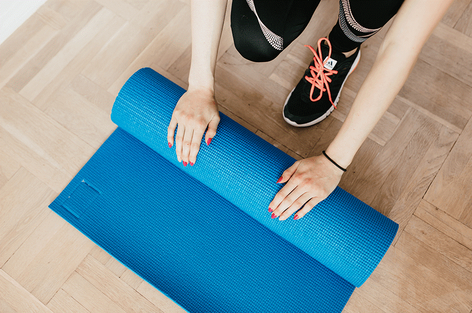 SELF-CARE While self-care might look like expensive day spas or trips away, it can also be as simple as thinking about one thing you haven't done in a really long time that gives you joy… and then doing it. It could be going for a walk, swim or bike ride alone. Reading a book. Writing out positive affirmations or colouring a mandala (both of which can be found in my Journal). Catching up with a girlfriend (on Zoom!). Savouring a takeaway cup of coffee at your favourite café (and walking the long way home). Self-care will look different from one person to the next, so don’t judge yourself for what self-care looks like for you. And remember: Taking care of yourself isn't selfish. It’s a necessity. You cannot grow, give, or show up as the best version of you if you're doing it from an empty cup. Want a trick to help set you for successful self-care? Communication. Sometimes it takes communication with the other people we live with, to let them know about our intentions so that they can a) help us keep committed and encouraged and b) so they know our plans and can adjust theirs accordingly. Once everyone is on board and they know how important it is, your family will adjust and make it work, especially when they see how good it is for you (and for them as well)! EXERCISE Our bodies were born to move. Exercising and movement not only help our physical health, but they help our overall wellbeing as well. Book a timeslot in your diary, tell your family of your plan, and then get out there and do it. Walk, jog, run, ride, swim, stretch, lift weights (at home for now). Head to the gym (when they reopen), the ocean or park. Roll out your mat, get your yoga blocks, pillows and straps ready. Or maybe now is the time to try something new. A new activity (stand up paddle boarding anyone?), a class or online exercise program. What can you do that you may have never tried before? I signed up for online hip-hop classes to bring back some fun on there dreary Melbourne winter days... I'll let you know how I go! (lol). And perhaps most importantly ask yourself - what do you WANT to do? Because if you don’t want to do it or it doesn’t really light you up, the chances of sticking with it are pretty slim. So schedule in the exercise that will light you up and get you going.  Here is a little video I did on this subject last year sitting in the thick of the pandemic... I feel like the message is 100% still true today! CONNECTION
We’re all humans here, and as humans we need (and crave) connection in some way. It’s also easy to let friendships and other relationships slip when we’re busy, feeling out of balance, or simply have kids and partners in our space 24/7. So here’s a reminder: you know those people who make you laugh, smile, feel understood, heard, loved and fill your cup?
Go for a walk. Have a picnic. Book in at your favourite restaurant for take away and have a picnic on the floor! Head out to the beach, park, or local trails when allowed. Try something new. Do the same old same old, just do something together. Not in the house! And remember, it doesn’t have to be expensive or massively romantic. It’s the time and connection together that’s important, not the actual activity or place. I challenge you to implement these three ways of bringing balance into your life by making plans to implement self-care, exercise, and connection into your day, week, of month. Schedule it in. Today. And tell your loved ones about your plans and priorities. Let them support you. And remember, I’m here to shift your mindset to THRIVE, so if you need additional help getting started or staying motivated, please comment below, check out my free value or subscribe to my blog to get tips like these direct to your mailbox. You can do this. Just pick one and get started! Take care ~ JB
Back to Blog
As a Mindset + Business Coach, the question I’m asked most often is: “Janel, what’s the ONE THING I can do on a regular basis that’ll make the biggest positive difference in my life?”. My answer? 100% your morning routine. The things we do every day make a difference. They make a difference to our mental and physical health and wellbeing, to our mindset, and to how we head into and experience the day. It’s the “little things” we incorporate into our routines and practice every day that can make the biggest overall difference. Now the tips and suggestions I’m about to share with you probably aren’t anything new. Many of us already KNOW the practices that are good for us, the trick is actually DOING those things. Meditate, journal, exercise, eat well; we know these are building blocks to thriving and making us feel better. The difficulty is putting one foot in front of the other to get started… and then to keep it going.  Sometimes the biggest block is that it all just seems so overwhelming… if I'm going to start a new morning routine, then it means I have to get up at 5:00am. Then I need to spend an hour and a half doing ALL THE THINGS to fill my mind, move my body, and get ready mentally and physically for the day. And next? Wham, there's an extra hundred million things to add to an already full morning. Enter your mind saying, “This is too hard. There’s too much to do. Forget it. No deal.” Now stop. First, don't think about the 50 million things you have to do tomorrow, this week, this month, etc… Instead, focus on what you can do TODAY. Focus on the one LITTLE thing you can do today, that can be incorporated and repeated tomorrow, and the day after. Focus on the ONE THING you can do today, incorporate it slowly and gently into your morning, and then become consistent at it over time. If you have one of my Learn to Thrive journals you know all about incorporating small changes over time. I call the morning routine “Five to Thrive”, and once you’ve gently incorporated all five into your morning routine it will look like this:
Now you try. Start with waking up just 10 minutes earlier tomorrow and choosing ONE THING (not ALL the things!) to add in. After you’ve chosen this one thing, do it consistently for the next 30 days. Do this one thing (and only this one thing!) until you’re comfortable with it. Only when you’re comfortable with it is it time to incorporate something else. So now that you’re comfortable with it, the next day you get up another 10 minutes earlier, and add ONE more thing, commit to it for the next 30 days, and so on. Does this seem slow? Maybe. But see it’s all about baby steps and simplicity. No complexity and no overwhelm. We’re aiming for one thing to be incorporated slowly and steadily over time. And the compound effect of this gentle routine on your mindset? Trust me, it is truly, truly incredible. 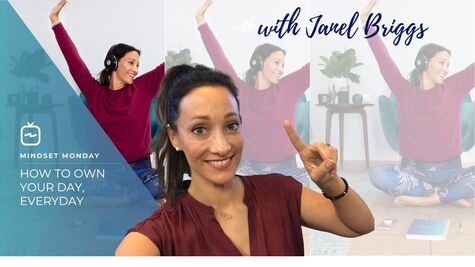 Watch full video here for more tipsYou start feeling more comfortable and confident in yourself and in your days. You wake up each morning, practice your routine and eventually find that you feel amazing. You feel amazing and your days and weeks and months are running smoother because you've been meditating every day, been writing in your journal every day, been moving your body every day, been eating a nutritious breakfast every day, been listening to music every day.
This compound effect of all these “little things”? AMAZING! Feeling motivated to get started? Do it! Not so motivated? Don’t wait! Why? Because you may never feel motivated to start, especially if it’s something new (or involves getting up earlier). Instead, take the leap, set your alarm, and jump in. Choose the one thing you’re going to start with and just start. Will it be easy? Maybe. That’s why taking gentle steps over time helps. But sometimes however you might need additional support along this morning routine journey. If this is the case, follow me at janelbriggs_thrive on Instagram and see how I use the "five to thrive " method or simply email me, hello@janelbriggs.com - I'd love to hear from you! Take care, JB
Back to Blog
Controlling the Uncontrollable6/4/2020  A lot of people were battling in 2019, it felt like... "how could it ever get any worse that this?". People I spoke with lived in hope that the dawn of a new decade would be a fresh start, and exactly what was needed...
And yet, the first quarter of 2020 totally blind-sided all of us. First, the bush-fire crisis and now the spread of COVID-19 has left us grasping for answers. What the hell? Our will is being tested as we look our deepest fears directly in the eye and are being asked to put on a show of courage and strength like never seen before. I've seen humanity come together in one breath to help raise funds for our hard hit communities, and then shattered and divided apart over the simple necessity of Toilet Paper, in the next breath. Sadly, I've seen more relationships falter in the first 3 months of 2020 than in the last 10 years. Stress and anxiety is at an all time high as WE ALL grapple with uncertainty. Why is this happening? What does it all mean? Will we be ok? How will we get through this? I don't own a crystal ball, but I can tell you I am almost certain that nothing will ever be the same... and I think you feel it too. Life will change, because that is how evolution works. The way we live, and work, and school has already had to shift, adapt, pivot. You will change through this experience. We all will. But, change in my view of the world.... isn't always such a bad thing. It is 100% how you ride the wave of change that will determine your experience. “The only constant in life is change”- Heraclitus Yes, this moment in time is NOT pleasant. And I repeat NOT. I am exhausted (like I am sure you are too) juggling the external world changes, finding ways to still work while keeping my son entertained. If you've lost work no doubt the added financial stress and limited opportunities now feel overwhelming too. With that ever constant nagging at the back of my mind - do we have enough toilet paper, and food?? We would all just love to know - how long is this thing going to go on for? Because then, we could make a plan right? We could map out the future. The lack of control of the outcome, is what gives us that anxious feeling. Nothing is for certain. So, how am I working to calm the waters of my mind? I am focusing on the 10 things I've worked out that I can control:
I hope these ideas help you to be able to feel like you can control something, during this time when the outcome is uncontrollable! Take care of yourselves and your loved ones. Janel
Back to Blog
 The One of the key reasons I was drawn to the coaching methodology of NLP was because the foundation itself is based on communication. It is all about our language. The way we speak to ourselves, speak to people, use our body language and our ability to actively listen to get to the root cause of a problem. I have always had a fascination with communication. Creative writing was one of my favourite subjects at school, later in my 30’s I studied Public Relations which is essentially communicating a message to influence with words, still and moving imagery, and media. Words have meaning, and often they have double meanings. It is the way we speak words that gives them emotion. After learning how certain words have a NEGATIVE charge on our life I opted to delete a few from my vocab; here’s why: The word “TRY” – a wishy washy word, that we all know means you won’t do it!
The word “DON’T” – I hear this one too often! “I don’t want that, or I don’t like it when he/she does this it makes me feel X”.
Now that little rant is over let’s talk... The word "SHOULD"! Louise Hay, author of many many personal development books explains this word the best: “The word should is one of the most damaging words in our language. Every time we use should, we are, in effect, saying it's“WRONG”. Either we ARE wrong, or WERE wrong, or we are GOING TO BE wrong.” I have to agree with her. Think about it for a moment. Can you think of a situation when someone recently has said to you: “You SHOULD do this, or you SHOULD handle it like that, or you SHOULD go this way” – How does that make you feel? When I’ve been on the receiving end of “Should” talking - I know full well I am not taking that persons advice/suggestion. Even if its amazing advice! HA. Why? There is some sort of internal radar to the word “should” that tells me DO NOT DO IT! (especially if it’s my husband telling me, for some reason HAHA!). How about you? It is because we feel like the person is saying we have handled it WRONG, or we cannot handle the situation so we need to be told what to do. Seriously, most of the time – women just want to be heard! Agree? We actually really want to communicate and connect - not be told what we should be doing. SHOULD (replaced with) COULD Now, imagine the same scenario where you’ve been told you “SHOULD” do something… and imagine hearing the word COULD instead? “You COULD do this, or you COULD handle it like that, or you COULD go this way”. How does that feel? Better, right? Why? Because when we replace our language with the word COULD – then we feel as though it gives us a CHOICE. We don’t feel wrong, we just see it as being offered multiple options. And it puts a whole new light on the subject. SHOULD (replaced with) WOULD In a recent Instagram video I shared with my thrive community the power of replacing the word “SHOULD” with “WOULD” when delivering our communication wanting to help a person to come to a decision, or give direction. I received some incredible feedback on how this simple shift in language has helped in the workplace when Managing a team, as well as in discussions with loved ones. Check it out here: Now that I have opened up your awareness to the power of your language, and the negative charge certain words create - you may start to notice how often you use them?
And, if you want to delete these words from your vocab – then go head! This shift in language will help to move you closer to where you really want to be.
Back to Blog
SELF MEDICATING with... being "BUSY"31/3/2019  When you think of the term self-medicating your first thought is probably of people drinking alcohol or taking drugs to relieve stress and mask the other issues going on in their lives. This does happen more often than not. What if I was to tell you that there is another way I see women self-medicating? It’s happening all the time and I myself used it as a coping mechanism for many years. It’s called adding more layers of “busy” to mask what’s really going on in your life. You know the feeling. It's when you are at capacity with your commitments and stressed. You are struggling to see the forest through the trees, you’re feeling unsure of how you are going to get EVERYTHING done today, this week, this month. You are being pulled in a million different directions and YET... You keep saying YES to every suggestion that comes up “I’ll do that!”. Going to an event, volunteering for things, agreeing to help a friend, squeezing in new projects at your kids’ school, at work, or even kicking off a new business, or second business before the first is profitable (guilty). Taking on more, and more and more. Until the “busy” drowns everything out. Because who can think straight when you’re THAT busy? It allows you to push all the emotions, the thoughts, and the feelings deep deep down inside of you. So, you don’t have to think about “that thing” that caused you to self-medicate with all those layers of busy. YOU'VE self-sabotaged yourself. And wait for the atom bomb to explode. Because who can physically do it all? With the level of busy chaos you’ve created running from here to there, holding everyone and everything up – to mask how you are really feeling. What happens next? YOU break. You have a melt-down. You yell at your kids. You screw something up at work. You drop the ball. You get sick, your body lets you down and forces you to physically STOP and you cannot fulfill ALL your crazy commitments. And then you give yourself permission to berate yourself for being a failure. For not being “good enough” or "strong enough" to do it all. When all you were doing was setting unreal expectations on your time anyway... But, why? Why do we do it? We use “busy” as a means for hiding and denying,. To diminish our feelings. And we use our failure of not being able to “do it all” as a means of control. Our programming says – isn’t it better to control your own failure…? Rather than having to deal with “that thing” you are hiding? Because apparently when explored “that thing” is going to tell you exactly what you already now… you are a failure anyway and you can’t handle this. What’s so hard about just dealing with the problem, the emotion or the situation that is causing us pain? I’ve seen this self-medicating with “busy” pattern happen many times over and over again, in my life. When I had events happening around me that were too much to bare, too much to process, I would throw myself into work. Saying to myself “thank god I can focus on work, it’s the only thing keeping me sane”. Sound familiar? And yet, all it did was break me down. Juggling a family, a career, and a side hustle should have been fulfilling enough. Yet I would take on more to strive for a feeling of accomplishment. I'll be honest. I wanted recognition “look how much she can handle! WOW, she must have it ALL TOGETHER!”. When what I really yearned for the opposite. For calm, balance and to be present in the moment. THEN I BROKE. My body broke, I would repeatedly get sick. I didn’t listen to the signs. I would continue to push through until I was forced into bed rest. Lose my voice so I couldn't speak. Forced to stop. So, then I could hate on my body and myself even more… “I am so weak, look at me I cannot even hold my life together” and play victim “Why me? Why do I get sick all the time? Why doesn’t this happen to anyone else but me?” One day I woke up and made the commitment to myself, to my husband, to my son to stop adding more "busy", to step out of overwhelm and deal with "that thing". If this is a pattern for you to… its ok, I got you ;) Here are my 4 biggest insights for getting back to basics and shedding the layers of “busy” in your life: 1) Evaluate the situation - take a moment of quiet, sit with yourself and ask:
2) If the request for your time is someone else’s "urgent" – then it’s not important I mean really, if this one thing is going to derail you, turn your schedule on its head with what someone else values as "urgent" then it’s not important to you! And if it’s important I am sure it can wait until you have time to process the request. If they need an answer back straight away, say “leave it with me and let me look at my calendar, I’ll get back to you shortly”. This helps you to protect your time. 3) Say No, instead of Yes! There is something really powerful in the word NO. This may be a new concept for you – “No” can actually be a full sentence (lol). It doesn’t have to be backed up with reasons, or explanation. "No" means = I have enough on my plate and I respect my time. 4) Reach out and talk to someone News flash - “that thing” that you are trying to deny or mask, isn’t going to go away. Typically, it festers until it explodes. Eventually it will come up in whatever raging form it takes, and you’ll have to deal with it. It may completely and totally overwhelm you until the point where you decide and say OK – its time. Most of the time bringing into the light “that thing” and airing it, gives it a different perspective. It is so much easier to breath and be present in life when you are on the relaxed side of "busy". Janel Briggs If this blog resonated with you drop me a "like", share a comment below, or reach out to me via email hello@janelbriggs.com To read more about stress and anxiety here or take my "Stress + Anxiety" survey today |

 RSS Feed
|
Get in touch
Email: hello@janelbriggs.com

|
Stay Connected
Subscribe and be the first to access new blog content news & updates. |